Trump’s Iran War Economic Damage Will Take Years to Fix, Warns EU Bank Head

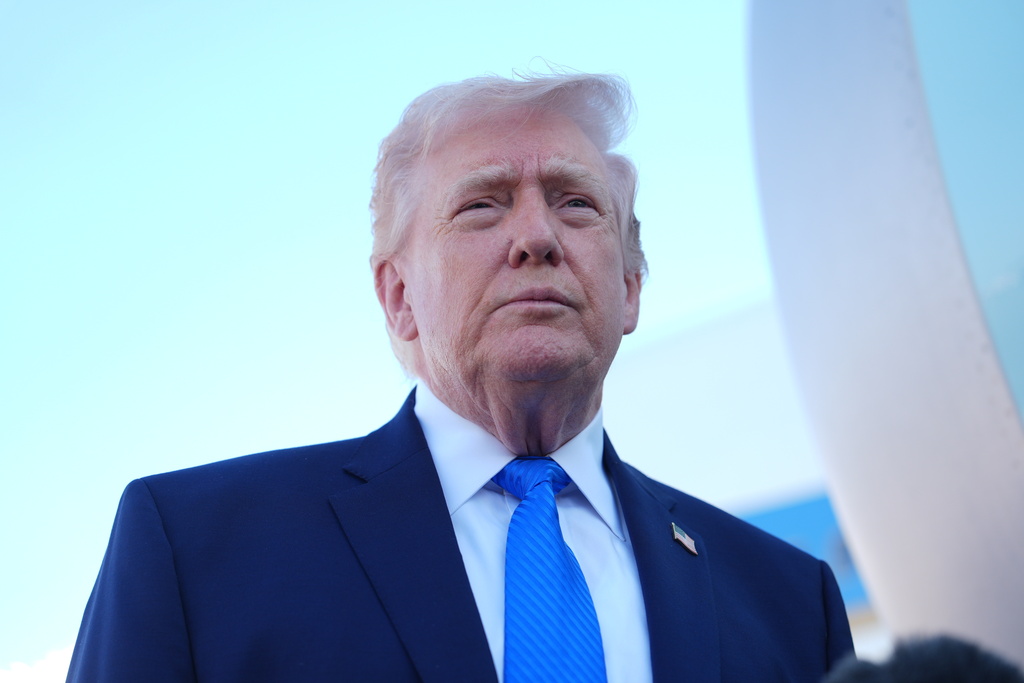
AP Photo/Mark Schiefelbein
Christine Lagarde, president of the European Central Bank (ECB), spoke to Zanny Minton Beddoes, The Economist’s editor in chief, this week about the economic impact of President Donald Trump’s war against Iran and warned of long-term disruptions.
“We are facing a real shock that is probably beyond what we can imagine at the moment,” Lagarde warned during the lengthy interview.
“I would agree with that. I mean, I look at financial markets and I think there’s some kind of cognitive dissonance going on. Do you think there is just a sort of blind optimism that somehow this is going to be over and the world will go back to normal, and people are going to suddenly wake up? Or will it be a gradual realization that there are going to be really significant consequences?” Minton Beddoes replied.
“Maybe they are overly optimistic and determined to stay optimistic in the hope that the positive scenario will materialize and we will be back to normal in a relatively short time, which is not what the technical experts are telling us — in terms of capacity, extraction, refinery, and distribution — because too much has already been damaged and there is no way that it can be restored in a matter of months,” replied Lagarde, who is also a former head of the International Monetary Fund.
“Most people are actually talking about years,” she added of Trump’s ongoing war, concluding:
I think what might also happen, because we’ve experienced it, is that you understand the actual consequences gradually as you read through the facts: the supply chain consequences, the kind of raw materials that are critically important for a particular manufacturing process. I’ll give you an example: helium, which transits through the Strait of Hormuz, is critical for microchips.
Well, unless you figured that out, you’re not certain that there will be instant — or relatively quick — consequences on the cost of microchips because of the scarcity that will result from not having available one of the raw materials. And I think this is a crisis where we are learning almost bit by bit, day by day, what the actual consequences will be, what countries will be most affected, and which commodities will be the most in demand.
Watch the clip above.
New: The Mediaite One-Sheet "Newsletter of Newsletters"
Your daily summary and analysis of what the many, many media newsletters are saying and reporting. Subscribe now!









Comments
↓ Scroll down for comments ↓