Senator Demands Answers After DOJ Hires Attorney Convicted of Election Interference as Election Monitor

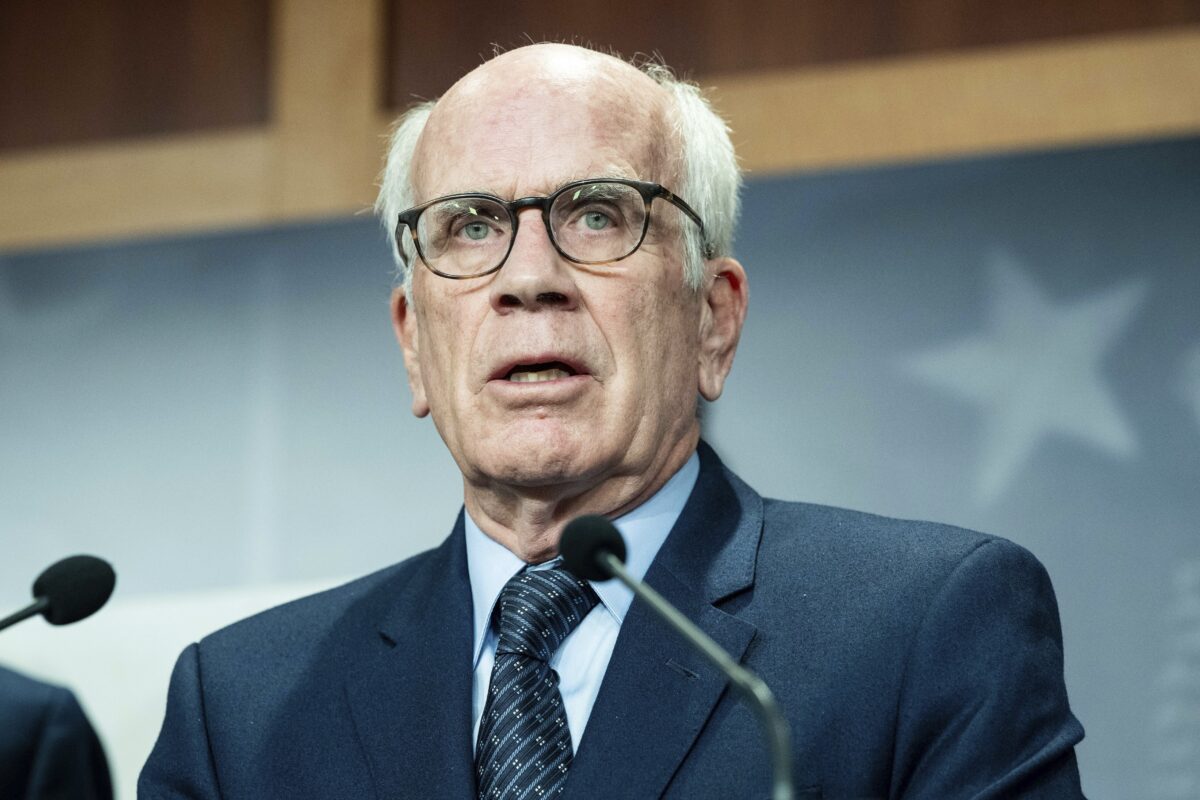
(Photo by Michael Brochstein/Sipa USA)(Sipa via AP Images)
Sen. Peter Welch (D-VT) sent a letter to Assistant Attorney General Harmeet Dhillon regarding “credible reports” he had read that the Department of Justice had hired an attorney who had been convicted of election interference for hacking election websites — and to work in the election monitoring division, nonetheless.
In 2016, David Levin, then a 31-year-old resident of Estero, Florida, was arrested and charged with three felony counts for “unauthorized access of any computer, computer system, computer network, or electronic device.” A press release from the Florida Department of Law Enforcement announcing Levin’s arrest stated that he was “accused of gaining unauthorized access to the Lee County Elections Office website on Dec. 19, 2015 and to the Department of State Division of Elections website on Jan. 4 and 31, 2016.” He claimed he wanted to look into the “integrity of elections.”
Levin later pleaded guilty to two misdemeanor charges, served a 20-day jail sentence, and received two years of probation.
Despite this history, Levin was among the attorneys hired by DOJ’s Civil Rights Division, which Dhillon heads, to conduct election monitoring activities, according to a report by Democracy Docket. The report further noted that Levin appeared to have “taken part in a recent DOJ election monitoring operation in Minnesota.”
Democracy Docket included “images and video posted online” and “publicly available facial-recognition reverse image search tools” to identify Levin’s presence at the Minnesota operations in August, as well as noting his Facebook profile photo “provides another indication of his DOJ ties,” as it “shows him standing in front of a flag bearing the DOJ insignia, with part of a woman wearing purple visible beside him. That attire appears to match an outfit worn by Assistant Attorney General Harmeet Dhillon at a July 8 Civil Rights Division swearing-in ceremony.”
Levin updated his Facebook profile photo earlier this month; the one Democracy Docket mentioned is still online here.
Neither the DOJ nor Levin replied to Democracy Docket’s request for comment.
Welch cited the Democracy Docket report in a press release and letter to Dhillon demanding answers on Levin’s apparent hire and role in the federal government’s election monitoring activities.
“Deploying politically motivated individuals to carry out DOJ’s poll monitoring efforts threatens to undermine Americans’ faith in the electoral process ahead of the November 2026 midterm elections,” wrote Welch.
The letter went on to emphasize that Welch had “pleaded guilty to conducting a cyberattack to obtain the credentials of a Supervisor of Elections for Lee County, Florida, which he then used to enter restricted portions
of the state’s Division of Elections and the county’s election websites,” and had “demonstrated how he hacked the website in YouTube videos and a local television interview.”
Dhillon had said during an August interview with Bloomberg News that the DOJ planned to “send approximately 1,000 employees to monitor the 2026 midterm elections,” Welch wrote, and the department “has already deployed primary election monitors to eleven states and hundreds of polling locations.”
These plans, Welch argued, “combined with Mr. Levin’s presence at election monitoring activities in Minnesota, raises serious questions about who the Division will send to conduct election monitoring during the midterm elections.”
He concluded the letter by listing seven questions he wanted Dhillon to answer by Thursday, October 8, 2026:
1. Please identify the factors that the Civil Rights Division considers when determining whether election monitors will be sent to a particular polling location.
2. Does the Civil Rights Division have a policy prohibiting individuals convicted of, or charged with, election-related offenses from participating in election monitoring on behalf of the DOJ?
3. Did Mr. Levin participate in DOJ election monitoring during the 2026 primary election in Minnesota? If so, what was his authority and who approved of his participation?
4. Does the Civil Rights Division intend to have Mr. Levin participate in election monitoring during the 2026 midterm elections in November?
5. Are there other Civil Rights Division employees who have been convicted of, or charged with, election interference offenses?
6. Were DOJ officials aware of Mr. Levin’s convictions for hacking election websites before he was hired?
7. Please describe Mr. Levin’s involvement in the Division’s election-related work.
New: The Mediaite One-Sheet "Newsletter of Newsletters"
Your daily summary and analysis of what the many, many media newsletters are saying and reporting. Subscribe now!








Comments
↓ Scroll down for comments ↓