Ken Paxton Accused of New Ethical Violations: ‘Significant’ Misrepresentations on His Financial Disclosures

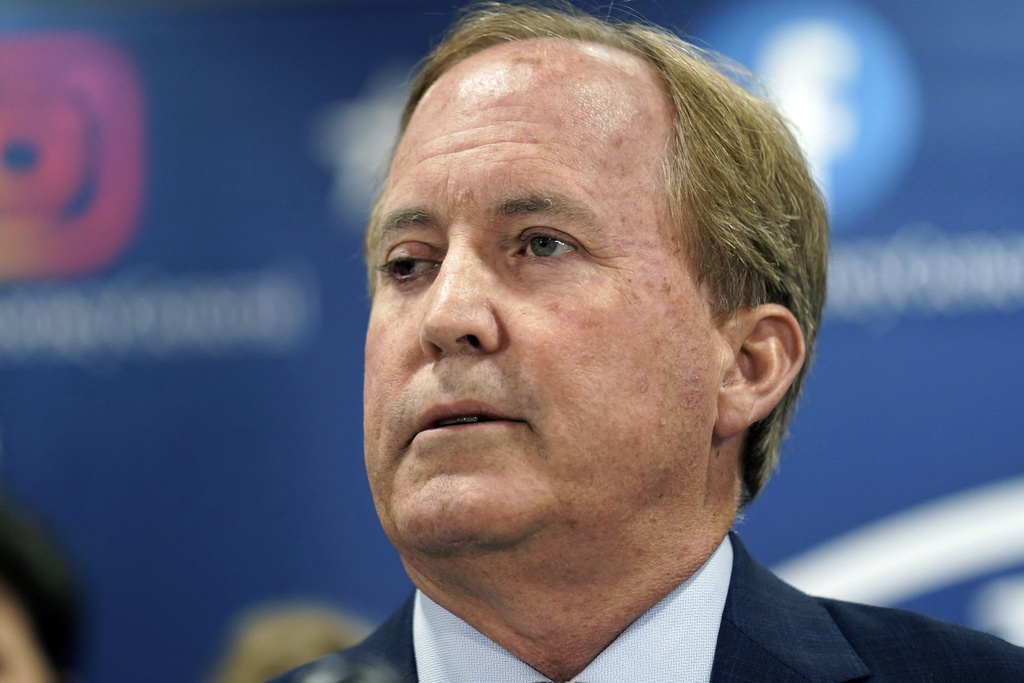
AP Photo/Eric Gay, File
Texas Attorney General Ken Paxton (R) is facing a new crop of accusations of ethical violations after a Friday report by The Texas Tribune with ProPublica.
Yes, different allegations; these are new additions to the already stunning series of scandals, lawsuits, controversies, and a messy divorce that have plagued Paxton for years and are widely credited with dragging him down in the polls in his U.S. Senate race against the Democratic nominee, State Rep. James Talarico (D).
Paxton scored President Donald Trump’s endorsement over the incumbent Cornyn and won the GOP primary, but that victory required a runoff, burned through campaign funds, and left the warnings from Cornyn and his allies looking prescient that Paxton would be a weaker candidate in the general election.
The article by Zach Despart, Kayla Guo, and Alexandra Glorioso reported that Paxton “appears to have violated federal ethics law in significant ways when filing recent disclosures of his assets and liabilities, creating confusion about his net worth and holding,” based on the reporters’ review of the records and consultation with ethics law experts.
Among the discrepancies in Paxton’s filings were his reports that he owned seven homes — six of which were listed for rent — but claimed to have earned zero income from all these properties.
The Tribune’s reporters found “some current residents and neighbors at those addresses [who] confirmed that the properties were rented,” and cited three experts who said not reporting income violates federal disclosure laws.
Specifically, the reporters found “two homes in Ocala, Florida; a home and a condo in Austin; a home in College Station, Texas; and a vacation lodge in Broken Bow, Oklahoma,” all of which Paxton claimed provided him zero income:
A tenant confirmed to the newsrooms she’s living at one of Florida houses. At the Austin condo complex, a next-door neighbor said Paxton’s unit has a renter. And the five-bedroom, three-story Oklahoma lodge he owns is listed online as a short-term rental for up to $1,200 a night, with fall bookings filling up fast.
On his disclosure forms, which require real estate income to be reported, Paxton for each property selected the option “None (or less than $201).”
Federal law further required Paxton to disclose mortgages under his list of liabilities if they are not on personal residences, but he did not list the mortgages totaling $1.3 million on three condos he owns at the Black Desert Resort, a luxury golf resort in Utah, the Tribune reported.
Another apparent misrepresentation was in Paxton’s valuation of his stake in a vacant lot in Texas as “up to $50,000,” the report added, “but his business partner told the newsrooms Paxton’s share for years has been worth about $1 million,” a violation of the federal law mandating properties’ fair market value to be disclosed.
Overall, the report said that Paxton had “omitted listing as assets seven properties worth about $5.2 million collectively, including the Utah condos for which he did not disclose mortgages.”
The ethics experts interviewed by the Tribune characterized Paxton’s “apparent errors and omissions” as “part of a partner” that “obscured the extent of Paxton’s income streams, assets and debt,” “[made] it difficult for voters to make sense of his finances as they mull whether to support him in November’s election,” and something that “could prevent watchdogs from evaluating his conflicts of interest as a senator,” if he were to be elected.
“It reflects either pure sloppiness on Paxton’s part or a deliberate effort to conceal some of his investments and property holdings,” said Craig Holman, a government affairs lobbyist for Public Citizen, a nonpartisan government watchdog group.
Paxton has faced previous accusation of not properly disclosing his financial information — all while his personal wealth has grown significantly, the Tribune reported:
Over three terms as attorney general, he has withheld financial information that could explain how he became a multimillionaire and had the resources to purchase more than a dozen properties in five states. He began including many of these on his state disclosures only after the Texas Ethics Commission closed a loophole in 2024 that Paxton had cited to leave them off. Most were acquired while Paxton earned a government salary of $153,750.
In the new federal disclosure, filed in August after Paxton received a three-month extension, he reported a net worth between $1 million and $27 million. That is a significantly higher range than the negative $1.9 million to $11.1 million net worth he reported a year ago, before he had secured the Republican nomination but after he had declared his candidacy for federal office.
The spike was driven not by Paxton’s acquisition of more assets but because the reported value on several of his properties soared.
Paxton could potentially face more legal troubles, the Tribune reported, if he (as a candidate or if elected, as a senator) is proven to have willingly falsified his financial disclosures, with penalties up to $50,000 fines and a possible felony charges for making a false statement to the government.
The aspiring senator has thus far managed to mostly escape consequences for his various scandals and troubles, other than his wife divorcing him. A criminal case dragged out for years before getting dropped, he was impeached by his fellow Republicans but the Texas Senate voted against removing him from office, and, as the Tribune noted, the Senate Ethics Committee “rarely investigates senators and has not formally sanctioned a member in 19 years.”
Still, Paxton’s issues are a core part of Talarico’s messaging, and the Democrat thus far has the financial firepower to overwhelm Paxton’s ability to counter that, as one of the Tribune’s experts pointed out:
James Henson, director of the Texas Politics Project, said the questions surrounding Paxton’s latest financial disclosures reinforce a longstanding narrative that the attorney general is secretive about his finances and may have leveraged his public position for personal gain.
“It’s his choice how much he explains or doesn’t explain,” Henson said. “But I think that comes with a potential cost, and we’re seeing that in public opinion.”
—
New: The Mediaite One-Sheet "Newsletter of Newsletters"
Your daily summary and analysis of what the many, many media newsletters are saying and reporting. Subscribe now!









Comments
↓ Scroll down for comments ↓