
We’re at War With Iran and Nobody Can Trust What Trump Says

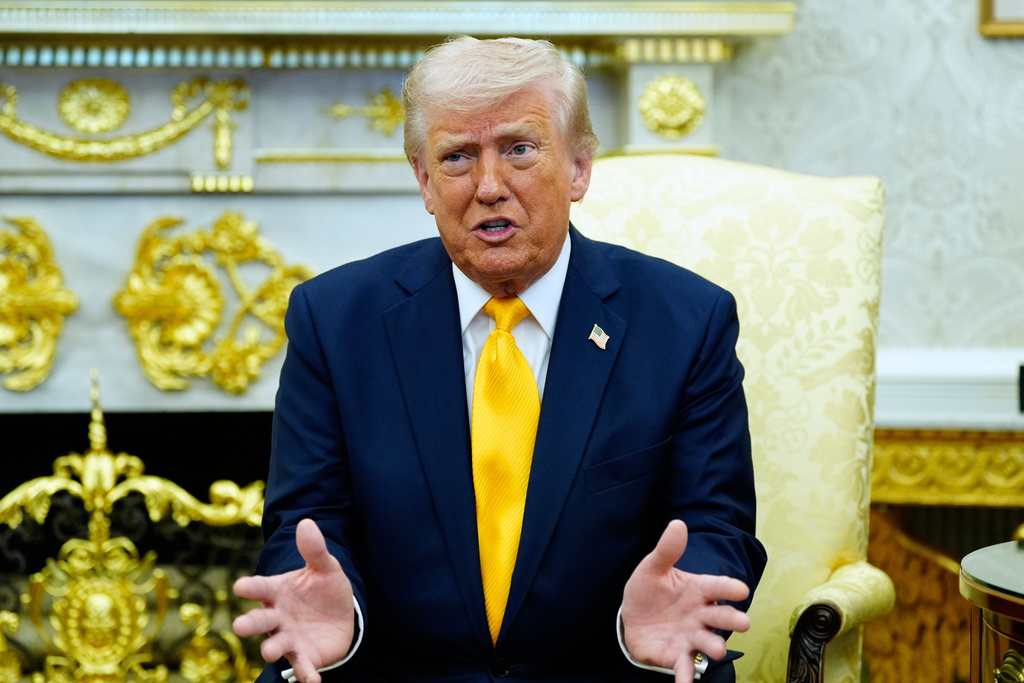
(AP Photo/Alex Brandon)
The United States is at war with Iran. And the commander in chief is winging it.
This is not a skirmish or a mere standoff. It is a sustained military engagement that is costing billions of dollars and American lives. It is precisely the kind of conflict that in any previous era would have consumed the full attention of the country, dominated every front page, and demanded an accounting from the commander in chief at every turn.
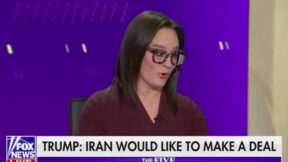
Instead, President Donald Trump is making claims about ceasefires that no ally has confirmed, that Iran has not acknowledged, and that have no visible diplomatic architecture behind them. These are not carefully shaped messages. They read as assertions introduced into the public bloodstream because they sounded useful in the moment.
Gerard Baker of the Wall Street Journal reached for the “Baghdad Bob” comparison, and even argued we should believe Iran state media reports over Trump’s. His ideological polar opposite, Jon Stewart, called Trump a “supreme misleader.” Two voices with very different audiences and incentives landed in the same place. That kind of harmonic convergence usually signals a political problem.
This is far more than that.
A president is inventing elements of an active conflict in real time, and the system around him is still treating those claims as material to process rather than assertions to stop and test.
The gap between those two things warrants attention because it reveals a deeper vulnerability. Foreign policy depends on signals that are clear enough to be trusted. Allies calibrate their posture based on what Washington says. Adversaries test their assumptions against it. Markets move on it. Governments make decisions about escalation, negotiation, and positioning based on what the American president says is happening.
When that signal is invented, the consequences do not wait.
An unsupported ceasefire claim is not just a communications problem for the White House. It becomes a live input into a system of governments and militaries trying to read American intent. Iranian officials respond to it. Allies are forced to address it. Regional actors begin factoring it into their own calculations. The claim starts producing real-world effects before anyone has established that it reflects anything real.
Baker’s break with Trump matters for what it reveals about the institution behind it. The Wall Street Journal editorial page speaks to markets, multinational executives, and foreign finance ministries. Its audience depends on American foreign policy signals being legible. Baker is telling that audience that the signal has become noise.
That is a meaningful shift, and it suggests that even within institutional conservatism there is a limit to how much improvisation can be absorbed when the subject is American power abroad.
The problem is that recognition does not slow the system that gives Trump his advantage.
He makes a claim about a ceasefire. There is no confirmation from Iran, no coordinated statement from allies, and no visible evidence of talks. The claim still moves immediately into circulation. It becomes the subject of panels, columns, and diplomatic responses before it has been established as real. Trump does not need every assertion to hold up. He needs it to be processed.
That dynamic is sustained by a media environment where speed outruns verification, and where being part of the conversation carries more value than waiting to establish its premise.
You can see the risk most clearly in a conflict like this. A presidential statement about de-escalation enters the global system the moment it is spoken. Other governments respond to it, even if only to deny it. Allies are pressed on it. The broader press treats it as a development worth analyzing. The claim acquires weight through repetition rather than confirmation.
Trump benefits from that lag. He benefits from a right-wing media ecosystem that often reframes improvisation as strategy. He benefits from a mainstream press that, even when skeptical, still has to treat his statements as consequential enough to engage in real time. None of this requires coordination. It requires a system that keeps moving.
The familiar defense is that Trump has always operated this way, but that explanation collapses when the subject is an active military conflict with a regional power capable of striking American forces.
We are spending billions of dollars a day on this fight. American service members are in harm’s way. Decisions about escalation and negotiation are being made in real time. The person responsible for those decisions is communicating about them in a way that his most prominent conservative institutional critic has compared to a propagandist denying reality on live television.
That comparison should not fade after a single news cycle.
We are in a conflict defined by uncertainty, rapid decision-making, and the constant risk of miscalculation. In that environment, credibility is not a luxury. It is infrastructure.
Right now, the people who need to rely on American signals — allies trying to hold a coalition together, adversaries weighing their next move — are being forced to ask a basic question they should never have to ask.
Whether anything coming out of this White House can be trusted.
This is an opinion piece. The views expressed in this article are those of just the author.
New: The Mediaite One-Sheet "Newsletter of Newsletters"
Your daily summary and analysis of what the many, many media newsletters are saying and reporting. Subscribe now!




Comments
↓ Scroll down for comments ↓