Trump Promised to Lower Grocery Bills. He Made Them Worse.

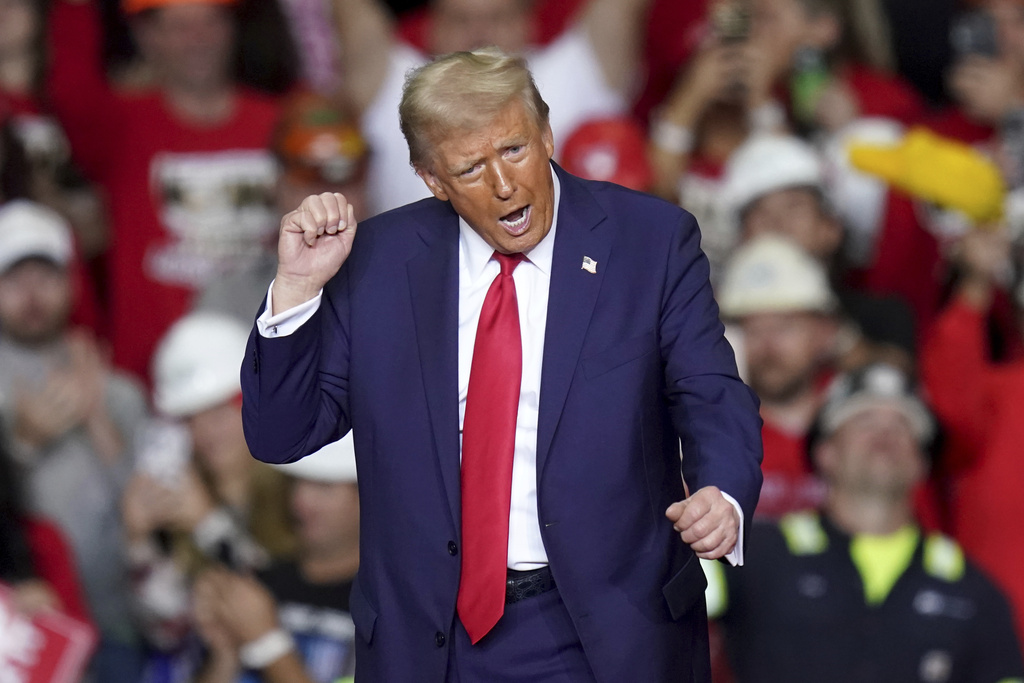
(AP Photo/Matt Freed)
I was watching the Knicks with my 22-year-old son, Nate, Thursday night, when he checked his phone and started listing what’s gotten more expensive. Groceries. Gas. Rent. The usual.
He’s not obsessed with politics. He just knows what things cost. That’s a massive problem for pro-Trump Republicans heading into the midterms.
Donald Trump ran his comeback on one core promise. Not democracy. Not foreign policy. He ran on your grocery bill.
He repeatedly said Joe Biden had crushed working Americans with inflation and that he alone could fix it. He promised grocery prices would fall on Day 1. He promised energy costs would be cut in half within 18 months. He promised relief.
More than a year in, that promise has failed.
Start with groceries. Trump has insisted prices are “way down.” They are not. Ground beef is up 17.2% from a year ago. Coffee has jumped 18.3%. Orange juice has risen 28% since he took office. Eggs are cheaper than during the bird flu peak. That is the win column. One item.
Energy tells the same story. Household energy prices are up 6.2% year over year. Electricity prices rose at more than twice the overall inflation rate in 2025, the fastest increase in over a decade. Trump promised to cut energy costs in half. They went up instead.
Now add Iran. The strikes that began in late February sent gas prices up 19% in a single month, pushing the national average to roughly $3.45. Analysts warn that if oil prices stay elevated, inflation could climb back toward 3% by year’s end. Trump closed his campaign by hammering Biden on gas prices. His own war did what Biden never could. It sent gas prices spiking.
Then there are the tariffs. Trump sold them as both punishment for foreign competitors and relief for American consumers. It was always a contradiction. It delivered on neither.
Estimates from the Yale Budget Lab show tariffs cost the average household between $1,300 and $1,700 in 2026 compared to a pre-Trump baseline. Many economists say inflation would likely be at the Fed’s 2% target if not for those tariffs. When the Supreme Court struck them down last month as unconstitutional, Trump reimposed new ones within hours.
The administration has quietly carved out exemptions for items like beef, coffee, and bananas after internal polling showed food prices were dragging down approval, which is not a trade policy so much as a White House admitting, without saying so, that the whole thing had backfired.
There is also a media story here that deserves more attention than it’s getting. In 2024, inflation coverage was relentless — and I say that as someone who was part of it. Every grocery receipt was a news hook. Every egg price spike became a symbol of everything the Biden administration had gotten wrong. The cost of a dozen eggs was treated as a referendum on the entire Democratic economic project, covered and recovered until it was burned into the political consciousness of every voter who set foot in a supermarket.
That same press corps has been notably quieter about what the numbers show now. Some of that is understandable — the Iran war is a massive, consuming story that demands coverage. But some of it is convenience. The affordability narrative that dominated 2024 has not disappeared because the problem went away. It has disappeared because the person responsible for fixing it is a Republican.
That dynamic is worth sitting with for a moment. The Iran war isn’t just consuming media oxygen — it is also directly responsible for the 19% spike in gas prices over the past month. So the same conflict that is making the affordability crisis worse is also the story that is pushing coverage of the affordability crisis off the front page. Trump launched a war that simultaneously deepened the economic squeeze his voters are feeling and handed the press corps a reason to stop writing about it. Whether that was calculated or accidental, the effect is the same: The story that beat Biden is being buried by a story Trump created.
What makes this more than a coincidence is that it follows a familiar pattern. When the numbers are bad, Trump does not try to fix them. He changes the subject.
This is not a new trick. It is the entire operating theory of Trump’s political brand. Create a crisis large enough to make the previous crisis seem small. The border replaces inflation. The war replaces the border. Each new emergency arrives just in time to rescue him from accountability for the last one. The grocery bill that powered his comeback is now buried under footage of fighter jets and diplomatic standoffs. His voters are still paying it. They just aren’t seeing it covered anymore.
In 2024, the cost of eggs was treated as a referendum on the presidency. In 2026, the cost of gas is rising again, but the conversation is about Iran, NATO, and strength abroad. The pressure on household budgets has not disappeared. It has been politically displaced.
What hasn’t changed is the burden, and it hasn’t fallen evenly. Labor’s share of income hit a record low last year. Wage growth has been slowest for lower-income and less-educated workers — precisely the voters who turned out for Trump on the strength of his economic pitch. The people most exposed to rising costs are seeing the least relief.
They know it, too. Consumer sentiment has fallen for five straight months and is approaching historic lows. Nearly half of Americans say the cost of living is the worst they can remember, and that includes a significant share of Trump’s own supporters.
His defenders will point to the headline inflation rate — currently around 2.7% — and argue it is lower than the Biden-era peak. That’s true, and it’s almost entirely beside the point. A slower rate of increase does not mean prices came down. It means they kept going up, just not as fast. The bills that were breaking people’s budgets two years ago are still high. The relief Trump promised has not arrived. What he delivered instead was tariff chaos layered onto an already strained cost structure, energy prices that moved in the wrong direction, and then a war that sent gas prices spiking just as he was taking credit for bringing them down.
The voters who sent him back to Washington were not asking for incremental macroeconomic progress. They were asking for their lives to cost less. That was the deal. And more than a year in, the deal hasn’t been honored.
Trump did not lower the price of groceries. He lowered the political importance of grocery prices.
And the media helped him do it.
This is an opinion piece. The views expressed in this article are those of just the author.
New: The Mediaite One-Sheet "Newsletter of Newsletters"
Your daily summary and analysis of what the many, many media newsletters are saying and reporting. Subscribe now!






Comments
↓ Scroll down for comments ↓