The White House Is Acting Like It’s Losing the Iran War Narrative

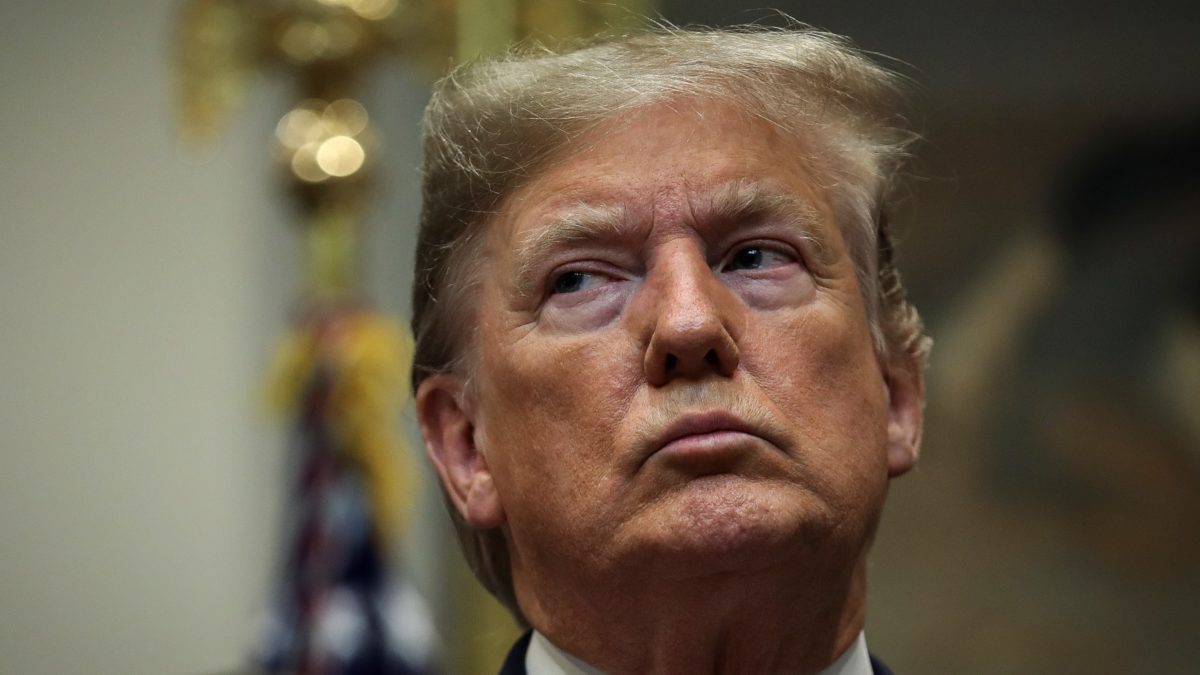
Drew Angerer/Getty Images
The United States is at war with Iran. Strikes are ongoing, killing dozens of Iran’s clerics and military leaders. Retaliation has already taken the lives of six U.S. soldiers.
By any conventional measure of Republican politics, the White House should be feeling good about where it stands: 77% of Republicans approve of the operation, and self-identified MAGA voters are, according to a new CNN poll, nearly 50 points more likely than non-MAGA Republicans to trust Trump on the use of force in Iran.
So why is the White House acting like it’s losing? Because the polling isn’t the problem. The narrative is.
Across the 24 hours following Secretary of State Marco Rubio’s Capitol remarks on Monday, a clear pattern emerged: speed, volume, and frame-correction. The White House, the president, and top surrogates weren’t simply explaining the operation — they were repeatedly pivoting to repair a specific interpretation of it. And the interpretation they were most desperate to kill wasn’t coming from Democrats or the mainstream press. It was coming from inside the house.
Rubio handed them the problem, inadvertently. Asked why the strike happened now, he walked through a sequencing that made strategic sense in full but was combustible in isolation: Israel was going to act, Iran would retaliate against American forces, so the U.S. struck first to reduce casualties. Paired with his argument about Iran’s missile production outpacing American interceptor capacity — roughly 100 ballistic missiles produced per month against six or seven interceptors — the full answer was defensible. But the viral fragment told a different story: Israel moved, and America followed. For an “America First” coalition already primed for skepticism about Middle East entanglements, that sequence read less like sovereign strategy than like getting dragged in by an ally.
The White House recognized the hazard almost immediately. What followed wasn’t routine communications. It was damage control with a specific target.
Press secretary Karoline Leavitt didn’t route her response through a friendly TV hit or a podium statement. When Daily Wire host Matt Walsh wrote that the administration’s messaging was, “to put it mildly, confused,” she replied to him directly on social media — not with a talking point but with an enumerated list of objectives and maximalist language about enemy deaths and outcomes. That’s not how you respond to a manageable complaint. That’s how you respond when you think a frame is about to set inside your own coalition and you need to stop it before it does.
She then circulated a National Review column specifically rebutting the claim that Rubio had said Israel dragged Trump into war. Again — not a broad defense of the operation, but a targeted surgical strike on a particular interpretation of a particular answer. The White House’s own publishing behavior fit the same template: a curated package of supportive quotes, moral language, and historical grievance designed not just to inform but to manufacture ambient consensus. When you flood the zone with “everyone serious supports this and it’s morally overdue,” you’re not communicating confidence. You’re trying to drown ambiguity before it hardens.
Trump himself made the anxiety visible on Tuesday. Asked whether Israel had forced his hand, he didn’t dismiss the question. He flipped it. “No — I might’ve forced their hand,” he told ABC’s Rachel Scott. “If anything, I might’ve forced Israel’s hand.” That’s a remarkable thing for a sitting president to say in the middle of an active military operation. It means the “who’s leading whom” question had gotten loud enough that Trump felt compelled to personally reverse its polarity. Presidents who are winning the argument don’t do that.
The reason the White House is nervous isn’t Tucker Carlson being Tucker Carlson. It’s that the critical voices aren’t fringe. Megyn Kelly commands a massive independent podcast audience. Matt Walsh reaches a different but enormous slice of the non-Fox right. Carlson himself has arguably more influence now than he did at Fox. These are not figures the administration can dismiss, out-poll, or ignore. They are the infrastructure of the very media ecosystem Trump’s movement built — and they are now running a sustained counter-narrative that the administration clearly believes has traction regardless of what any crosstab says.
That’s the real story underneath the Rubio clip fight. The polling says the base is holding. The behavior says the White House doesn’t entirely believe it. And the voices they’re most worried about aren’t political opponents — they’re the ones who helped build the movement, now asking out loud whether this war belongs to it.
The numbers may be fine. The meaning is still in play. But there’s a sharper irony underneath all of it. The voices the White House is fighting hardest against — Carlson, Kelly, Walsh — are never actually going to break with Trump. They’re critics, not defectors. Their audiences may not defect in any traditional sense, but sustained elite criticism within a coalition can erode enthusiasm, depress turnout margins, and shift donor energy in ways that don’t show up in approval polls until it’s too late.
Which means the administration may be making a category error — treating a narrative threat as a coalition threat, and spending down Leavitt’s credibility and Trump’s own bandwidth fighting people who are, at worst, going to be annoying for a few weeks before the news cycle moves on.
If this were a typical controversy, the influencer criticism would fade in weeks. Foreign policy escalations don’t always behave that way. If Iran becomes a sustained storyline, the criticism compounds rather than dissipates — which is arguably a reason for the White House to be more careful about how it engages, not less.
And by engaging so visibly and urgently, they may be elevating the very narrative they’re trying to kill. Leavitt replying directly to Walsh, Trump personally flipping the “forced hand” framing, the NRO amplification — every one of those moves signals to the broader media ecosystem that this line of criticism has enough bite to warrant presidential attention. You don’t send the secretary of state back to the cameras to re-explain something that isn’t hurting you.
The White House’s panic may be doing more damage than the original criticism ever could have. A more charitable read is that this is preemption rather than panic — a communications team getting ahead of a narrative before it consolidates. But preemption and panic produce identical behavior. The tell is whether the response is proportionate. This one wasn’t.
This is an opinion piece. The views expressed in this article are those of just the author.
New: The Mediaite One-Sheet "Newsletter of Newsletters"
Your daily summary and analysis of what the many, many media newsletters are saying and reporting. Subscribe now!








Comments
↓ Scroll down for comments ↓