
Renee Good’s Killing Reveals Why Fact-Based Journalism Loses the Narrative Battle

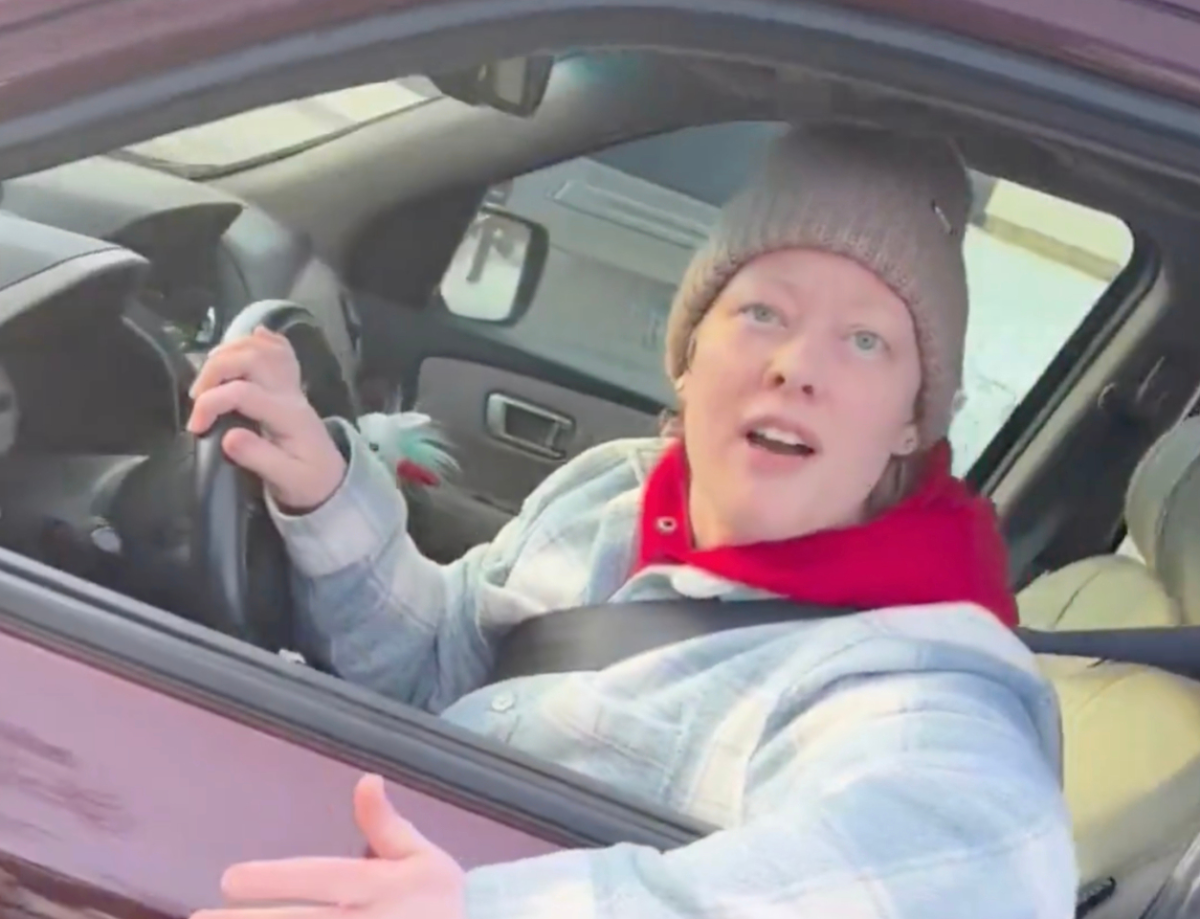
In the aftermath of the killing of Renee Good, the lines hardened almost instantly. Two camps emerged, each fully convinced the available footage proved its case.
One side saw a clear vehicular attack that justified lethal force. The other saw an unjustified killing followed by an official lie. Each accused the other of gaslighting. Each insisted the facts were obvious.
Good, 37, was shot and killed by an ICE agent in south Minneapolis on January 7 during a federal enforcement operation. Within hours, the Department of Homeland Security said the agent acted in self-defense after Good attempted to run over officers with her vehicle. Videos and eyewitness accounts soon circulated, showing movement of Good’s car but leaving both her intent and the perception of the ICE agent who fired three shots unresolved.
Local officials, including Mayor Jacob Frey and Governor Tim Walz, rejected the federal account, calling it inaccurate and misleading. The FBI is now leading the investigation, while state authorities say they have limited access to evidence.
Those facts are widely accepted in mainstream reporting. What locked in quickly was narrative-driven interpretation.
By the time most Americans saw the footage, they had already been told what it showed. Not by investigators, but by the institution that fired the weapon. That head start shaped everything that followed. In a situation defined by incomplete video and a chaotic scene, the first confident narrative did not merely inform the debate. It set the terms.
This dynamic is often explained as polarization, which is true but incomplete. Writing in Thursday’s Reliable Sources newsletter, Brian Stelter framed the case as another example of “competing realities,” in which people see what they expect to see and select evidence that confirms their beliefs. That observation describes how audiences receive information, but it understates how quickly those realities are constructed.
Most people recognize this pattern. A celebrity scandal breaks and immediate takes harden before facts emerge. A corporate crisis produces a polished statement within hours while details surface over weeks. A police shooting is framed officially, video complicates the story, and large portions of the public never revisit their initial conclusion. Once a justification is asserted with confidence, uncertainty becomes a liability. Waiting sounds weak. Saying “we don’t yet know” sounds evasive. Video stops being evidence to examine and becomes ammunition to deploy.
Video compounds the problem because it carries the illusion of objectivity. Unlike testimony or documents that audiences recognize as interpretive, footage feels like unmediated reality. That perceived directness makes it more persuasive and, paradoxically, more vulnerable to narrative capture. People believe they are seeing what happened, rather than a partial view already embedded in a frame. The confidence video inspires makes the framing that precedes it even more decisive.
This is how competing realities take hold. Not because the evidence is clear, but because the narrative arrives first.
Conservative media, following the lead of President Donald Trump and his surrogates, played a predictable role in hardening one side of that divide. It amplified the federal account and treated it as vindication, escalating language and certainty while framing skepticism as hostility to law enforcement. This is not simply about political lean. It reflects incentives. For media operations built around audience validation and tribal reinforcement, uncertainty does not perform well. Decisiveness does. Confidence does.
Legacy outlets operated under different constraints. They reported the federal claim alongside local officials disputing it. They emphasized what was known and what remained unclear. They centered the investigation rather than racing to moral closure. That restraint did not spare them accusations of bias or bad faith. In a narrative arms race, caution is easily reframed as deception.
This is why legacy media continues to lose narrative battles. Fact-based journalism is structurally slower than vibes-based certainty. They are playing by different rules with distinct goals. The result is a standoff in which both sides believe the footage has settled the matter. Each treats the other’s interpretation not as mistaken, but as dishonest. The investigation, still ongoing, is already viewed as either a formality or a sham, depending on prior belief.
That is the deeper problem obscured by talk of competing realities. The issue is not that Americans disagree about what they see. It is that the race to define what is seen has become so fast, and so decisive, that disagreement hardens into certainty before truth has a chance to catch up. Accountability does not disappear in that environment. It becomes another thing people choose to accept or reject based on team.
When narrative velocity replaces evidentiary patience, even video stops being a path to shared understanding. It becomes fuel for a fight that was framed long before the facts arrived.
This is an opinion piece. The views expressed in this article are those of just the author.








Comments
↓ Scroll down for comments ↓