Press Freedom’s Real Crisis Is Hiding in Plain Sight

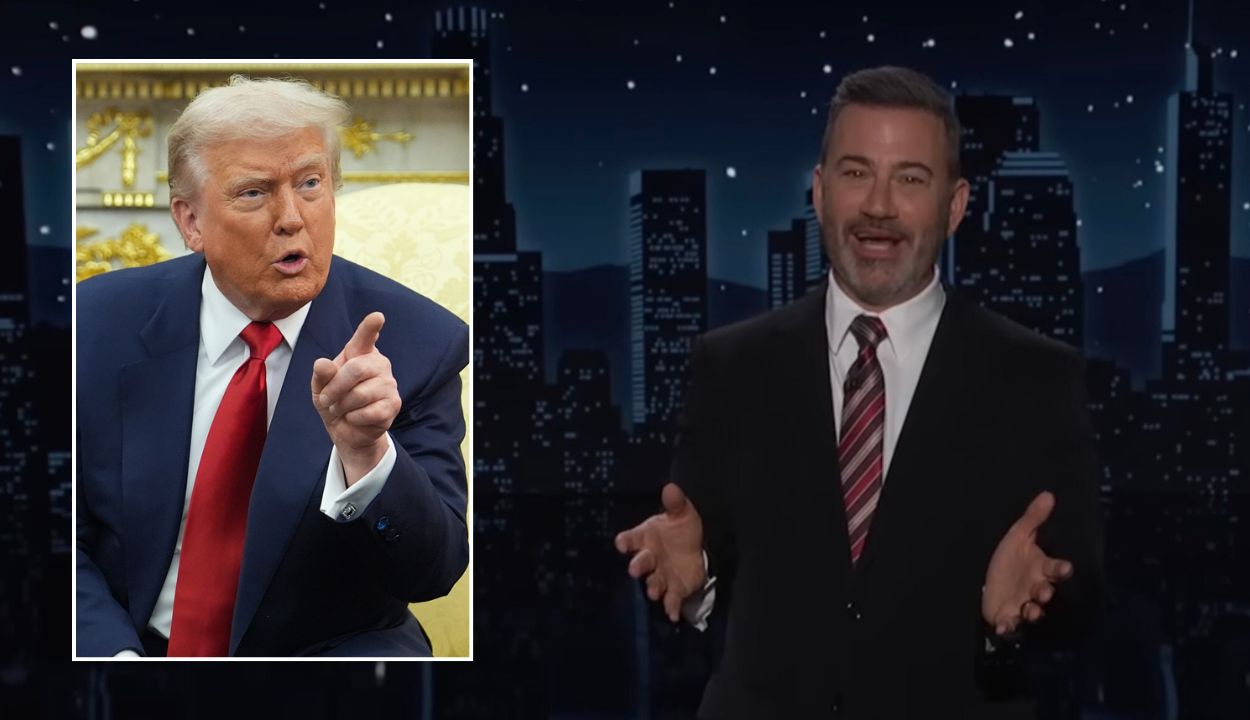
(ABC/Evan Vucci/AP photo)
This post was originally published on Dan Perry’s Ask Questions Later Substack page
***
Media freedom is under pressure as governments discover the effectiveness of not only killing and jailing journalists but deploying regulation and legal pressure – such as the FCC pressuring ABC to fire Jimmy Kimmel. But as we mark World Press Freedom Day on May 3, there is a deeper shift at play: the creator economy has collapsed the distinction between journalism and content, leaving the public unsure what the press is, and why it’s worth defending. This is the actual emergency.
At the baseline level, the figures making the rounds look bad: The Committee to Protect Journalists reports that 330 journalists were imprisoned worldwide at the end of 2025, while Reporters Without Borders finds that more than half the global population now lives in countries where press freedom faces serious constraints. They describe the visible assault on journalism, mainly from authoritarian systems that have sought to controlling inform. Independent reporting disrupts that control, and repression follows.
The more surprising development is what’s happening in some democratic systems, chiefly in the United States under the Trump Administration, where pressure on the media operates through institutional channels that carry the appearance of legality. The shameless move by the Federal Communications Commission to initiate an early review of station licenses held by ABC is this week’s prominent case in point. Kimmel had caused offense with jokes about the First Lady. This kind of procedural burden can function as pressure in a clear assault on free speech.
The pattern extends into more direct interventions affecting how journalism is practiced. The administration has tightened control over White House press pools over political issues and imposing new constraints on Pentagon access while using litigation as a tool, with high-profile lawsuits targeting outlets including CBS and CNN over coverage, impose financial and legal burdens.
Across democratic (but backsliding) societies, variations of this pattern appear through regulatory scrutiny, legal exposure, and public campaigns that seek to delegitimize reporting. These measures rarely amount to outright suppression, yet raise the cost of offering the government. The effect accumulates gradually, nefariously, and often without significant public opposition.
Why is much of the public indifferent, then? Don’t people want journalism? I think part of the answer is confusion at this time about what journalism even is. The social foundation that sustains press freedom has shifted as the information ecosystem expanded to include a vast array of creators, commentators, and independent voices, all competing within the same attention economy.
Publication no longer requires institutional backing, and influence disperses across platforms that reward speed, emotion, and engagement. The cost-related barrier to entry and distribution – basically, the very thing that defined the media – has been blown to smithereens.
In that environment, the distinction between journalism and other forms of content has blurred. Reporting grounded in verification and editorial discipline appears alongside opinion, advocacy, and performance. Audiences encounter a continuous stream of information in which method and intent are unclear. Is the agenda political? Commercial? Journalistic? Nothing is clear.
When journalism becomes indistinguishable from the broader flow of content, the concept of press freedom loses precision. Defense of the press begins to resemble defense of a particular industry rather than a civic principle tied to the public’s access to reliable information. The result is a diminished inclination to respond when pressure on journalism intensifies.
The role of journalism within a democratic system rests on expectations that require clearer articulation than they currently receive. A functioning information environment depends on a shared understanding of what distinguishes reporting from the wider universe of speech that now surrounds it. Without that distinction, the protections associated with press freedom will continue to erode – and journalists will start to look to people like a special interests group demanding privileges for its own convenience.
This process is now so far gone that for PR firms in many cases it is much more important to gain traction with creators whose loyal audience is in the millions that with established journalistic brands that often actually struggle to make a measurable impact. These creators often have no standards; the established media has not successfully made the case for standards.
A renewed covenant between journalists and the public would begin with a commitment to verification as a discipline. Reporting follows evidence through methods that can be described, examined, and corrected. Independence forms a second pillar, expressed through consistent scrutiny applied across political lines, including toward constituencies that a given outlet’s audience may favor.
Transparency has become essential in an environment saturated with competing claims. Readers benefit from understanding how information was obtained, where uncertainty remains, and what separates reporting from analysis. Alongside transparency, accountability reinforces credibility through visible correction of errors and openness to challenge.
Two additional principles are essential. Journalism cannot simply follow what is already spreading online, and it cannot treat every surge of attention as equally important. Holding that line has a business cost. It means giving up some reach in a market that rewards immediacy and outrage. But that tradeoff is unavoidable if journalism is to survive as a concept rather than dissolve into the broader churn of content.
And only then, by the way, will many people pay for much of it, which is the only way non-state and non-philanthropical, non-agenda journalism will survive.
That covenant can apply to creators and institutions both – and most likely, it will be most often upheld by institutions. In this way they might recover some of their mojo.
Press freedom endures when journalism remains recognizable as a distinct practice grounded in discipline and when the public understands its role in establishing a shared account of reality. In a whirlwind of clickbait, much of the media has badly strayed from that understanding.
Dan Perry is the former London-based Europe/Africa editor and Cairo-based Middle East editor of the Associated Press, the former chairman of the Foreign Press Association in Jerusalem, and the author of two books. He is a widely published columnist and TV commentator. Follow him at danperry.substack.com.
This is an opinion piece. The views expressed in this article are those of just the author.
New: The Mediaite One-Sheet "Newsletter of Newsletters"
Your daily summary and analysis of what the many, many media newsletters are saying and reporting. Subscribe now!










Comments
↓ Scroll down for comments ↓