Media Leans on Tired Tropes to Undermine James Talarico’s Support With Black Voters — And Ignores the Real Problem


Screenshot
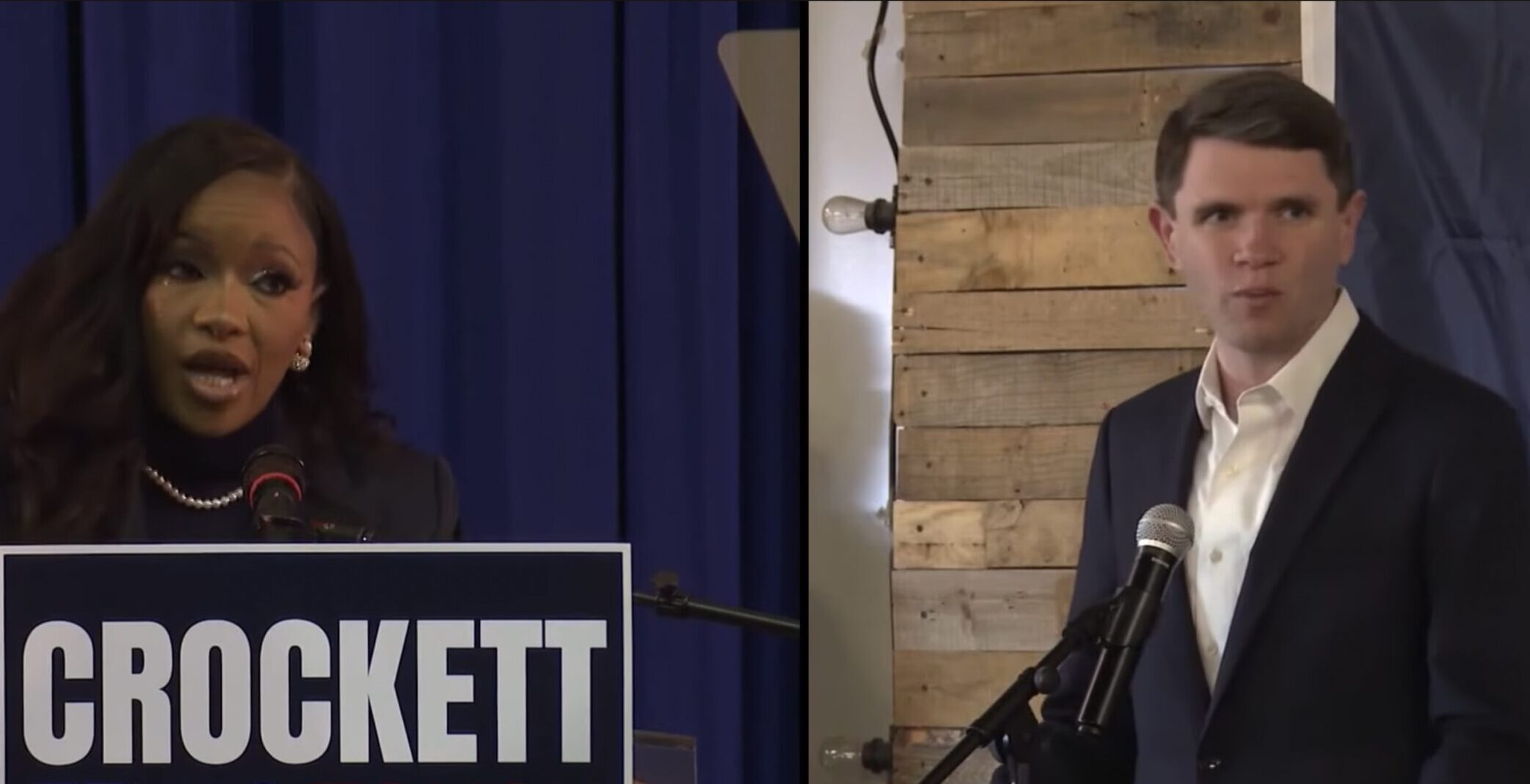
Ever since James Talarico started running against Jasmine Crockett in the U.S. Senate Democratic primary in Texas, the legacy media has searched for intra-party conflict drawn along the lines of race. True, Crockett herself was eager to perpetuate the idea that Talarico would have to make up ground with Black voters if he won. True, most Black Democrats supported Crockett. True, Talarico himself has been meticulous in framing his outreach to Black voters as a case of earning their vote.
But we are now just over a month to Election Day and we have an answer to the question, posed by many outlets — including The New York Times in a Monday article — “Does Talarico face a unique problem in attracting Black voters?” No, he does not. Rather, he faces a problem familiar to any Democrat running in a red state: The GOP doesn’t want Black voters to vote.
Despite the contentious primary, polls now show him garnering substantially more support from the Black community than previous contestants Beto O’Rourke and Colin Allred. According to one August poll, just 7 percent of Black voters said they were less likely to vote because Talarico became the nominee. Every single voter interviewed by the Times said they were planning to vote for Talarico. Some sounded resigned to it. Others were quite enthusiastic, indeed. In fact, one former Crockett supporter said she would do while invoking a notable parallel:
“James Talarico to me is the new Caucasian Obama,” said Janice Prevost, a makeup artist who had supported Ms. Crockett. “I hope one day he runs for president.”
Yet legacy media insists on rehashing Crockett’s brittle stance toward Talarico and situating Talarico’s singular appeal to Black voters as having existential stakes.
Allowing that the polls show Talarico ahead in Black support beyond O’Rourke and Allred, The New York Times switched the emphasis in order to retain the emotionality: It’s not that Talarico doesn’t have the support–it’s about a lack of *enthusiasm.*
But to win statewide in Texas, something a Democrat has not done in decades, Mr. Talarico must do more than just win with Black voters, political consultants said; he needs them to turn out in large numbers.
Surely, Talarico needs a substantial turnout among Black voters to win, as is the case with most Democrats in competitive races anywhere. But the Times’ subhead of the story makes the situation sound like a soap opera: Black voters “rejected James Talarico” and have “hard feelings” but those may be “wearing off.” They amended the original headline to the piece as well, starting out with “Black Voters Are Warming to Talarico in Texas, Turnout is the Bigger Test,” before revising it to, “Pivotal Challenge for Talarico in Texas: Getting Black Voters to the Polls.”
Banging on the storyline “Talarico has to entice Black voters to the polls” also minimizes the brutally sophisticated decision-making of this demographic, historically one of the most reliable segments of the Democratic coalition–an especially impressive feat in Texas. Texas has one of the highest levels of Black voter engagement in the country, despite also having some of the highest barriers to voting.
Black voters are, in many ways, the inverse to the prototypical working-class Trump supporter. Statistics show that Trump voters chose their candidate based on racial resentment and general anger about “the economy”–intensely emotional factors. And working-class Trump voters do this though Trump policies actively harm the working class. (Indeed, regrets about those votes are likely driving Talarico’s rising poll numbers right now.)
Even Trump’s gains in Texas among Black men between 2020 and 2024 (from 11 to 22 percent) must be seen through the lens of Black voters’ strategic, informed support for Democrats, because Black women did not waver. Their support for the Democrats grew (92 to 94 percent) and they had far greater turnout, significantly blunting the swing among men. You’ve probably heard a lot about that jump among Black men; you may not have heard that Trump’s support in Texas among Black voters overall increased just 3 percent.
Finally, any reporting that turns on doubts about minorities making it to the polls must engage with the biggest story about voting in Texas: the GOP’s systemic efforts to suppress Democrat turnout. This operation is as big a threat to Talarico’s candidacy as any specific kind of campaign outreach.
As I said, Texas makes it harder to vote than almost any other state, through audacious laws that only exist because the Supreme Court shredded the Voting Rights Act and the Republican Party knows deep down they can only win if they cheat. They’ve shortened voting periods and closed polling places in vulnerable districts. They’ve made it harder to register and vote by mail.
Republicans’ malicious attempts to silence minorities and other segments of the Democratic coalition are the story that deserves everyday attention. But stories about systems are hard to make colorful or compelling; it’s easier to coast on long-disproven theories, invented emotional investment, and the tired trope of “Dems in disarray.”
——
This is an opinion piece. The views expressed in this article are those of just the author.
New: The Mediaite One-Sheet "Newsletter of Newsletters"
Your daily summary and analysis of what the many, many media newsletters are saying and reporting. Subscribe now!

Comments
↓ Scroll down for comments ↓