
J.D. Vance Insists Critics Are ‘Gaslighting.’ Video of ICE Shooting Reveals He Is.

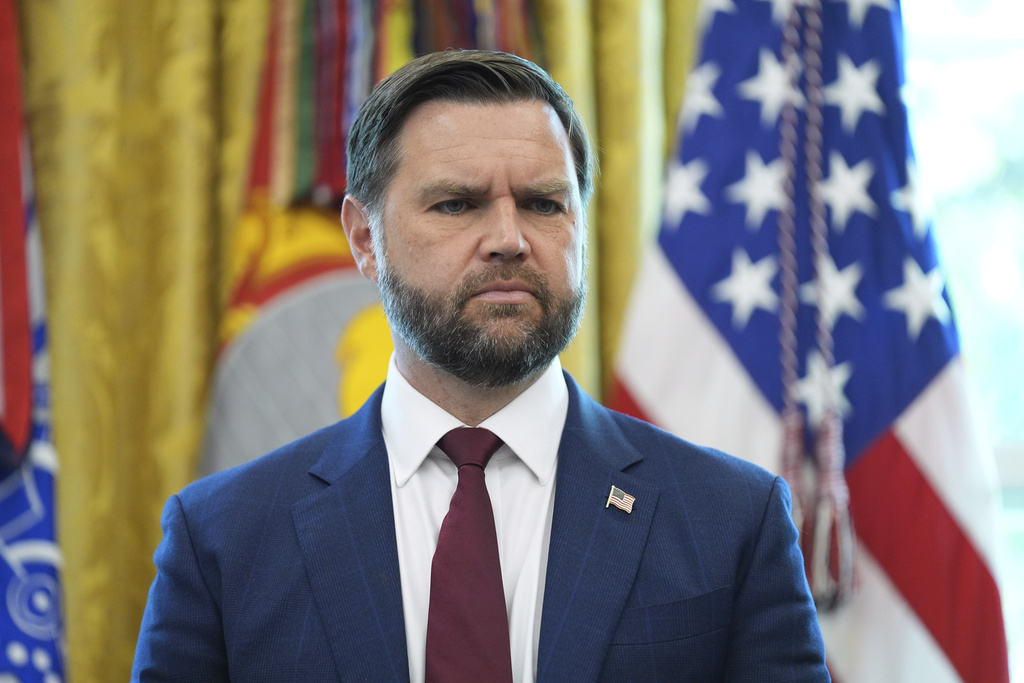
(AP Photo/Evan Vucci)
Video of Renee Nicole Good’s killing by masked ICE agents in Minneapolis on Wednesday clearly reveals a vehicle turning away from officers as shots are fired. Vice President J.D. Vance has described the shooting as clear self-defense and has accused critics of “gaslighting.” His argument requires the public to disregard what the video documents.
In a post pushing back on legal criticism of the ICE agent’s actions, Vance framed the encounter in absolute terms. “The gaslighting is off the chart,” he posted on X. “This officer was defending his life against a deranged leftist who tried to run him over. This guy was doing his job. She tried to stop him from doing his job.”
That framing sets the terms of Vance’s argument. The officer acted in self-defense. The victim was an ideological enemy. Any disagreement is dishonesty.
Good, a 37-year-old U.S. citizen, was killed during an ICE operation in South Minneapolis. A New York Times analysis of bystander-shot video footage includes recordings from multiple angles. The footage shows federal agents approaching her Honda Pilot, attempting to open the driver’s side door, and ordering her to exit. As an agent pulls the door handle, the vehicle reverses. It then moves forward while turning sharply to the right into traffic.
The sequence establishes the physical reality of the encounter. The officer approaches the vehicle. The driver reverses. The car moves forward with a rightward turn. The officer steps clear of the vehicle’s path. The officer then fires three shots at close range as the vehicle is already moving past him. The car continues forward into traffic. Good later died of her wounds.
The Times video analysis shows the masked ICE agent was clearly not in the path of the SUV when he fires three deadly shots.
Federal officials rushed to claim Good had “weaponized her vehicle” and attempted to kill agents. The video shows a driver attempting to leave and an officer who avoids harm by moving out of the way before firing.
That sequence undermines the self-defense claim.
Deadly force is justified only when it is necessary to stop an imminent threat and no reasonable alternative exists. In this encounter, safety is achieved before the trigger is pulled. Distance already exists at the moment the officer fires.
Gunfire does not change a vehicle’s direction. The threat ended when the officer stepped out of its path.
This principle underlies longstanding police guidance prohibiting officers from firing at moving vehicles. Such shots rarely neutralize danger and frequently escalate it. The Minneapolis shooting reflects the risks those policies are designed to prevent.
Even conservative legal analysts have acknowledged the distinction. Jonathan Turley, a pro-Trump Fox News contributor and George Washington University law professor, noted on Fox & Friends Thursday morning that while officers face genuine dangers, the legal standard for deadly force requires an imminent threat that cannot be avoided by other means. The video shows the officer created that avoidance before firing.
Even border czar Tom Homan distanced himself from the Department of Homeland Security’s initial statement blaming the victim. When pressed by The New York Times after viewing the video, President Donald Trump sidestepped follow-up questions — a notable departure for a figure known for doubling down.
Vance has treated the shooting as resolved. He has labeled Good a “deranged leftist,” described the killing as justified, and dismissed disagreement as dishonest. He has demanded that Democrats publicly affirm his conclusion and has framed refusal as hostility toward law enforcement.
This response defines the nature of the dispute. The conflict centers on authority over interpretation.
Vance is asserting that executive narrative should override direct observation. His accusation of gaslighting is projection—he is doing precisely what he accuses critics of doing. He claims critics are distorting reality while demanding the public disregard what the video plainly shows. The accusation functions as enforcement, pressuring viewers to distrust their own perception and defer to his interpretation instead.
The attack on Good’s political identity serves the same purpose. Labeling her a “deranged leftist” establishes that she deserved to die, making the circumstances of the shooting irrelevant. Political identity becomes justification. Evidence becomes optional.
The definition of gaslighting is making someone doubt their own perception of reality. That is exactly what Vance is attempting. He demands the public deny what they see: an officer who steps aside before firing, shots that follow achieved safety, a vehicle continuing forward after being hit. The claim that gunfire saved the officer’s life requires rejecting the documented sequence of events.
The larger implication extends beyond this incident. A sitting vice president is asserting that executive interpretation should override verified video evidence. Acceptance is demanded rather than argued.
Renee Nicole Good is dead. The footage exists. When executive authority demands precedence over observable reality, accountability fails. That is the most consequential fact in this case.
This is an opinion piece. The views expressed in this article are those of just the author.



Comments
↓ Scroll down for comments ↓