How Broken Is the Media? Just Look at the Coverage of Trump’s Exploding Debt Crisis

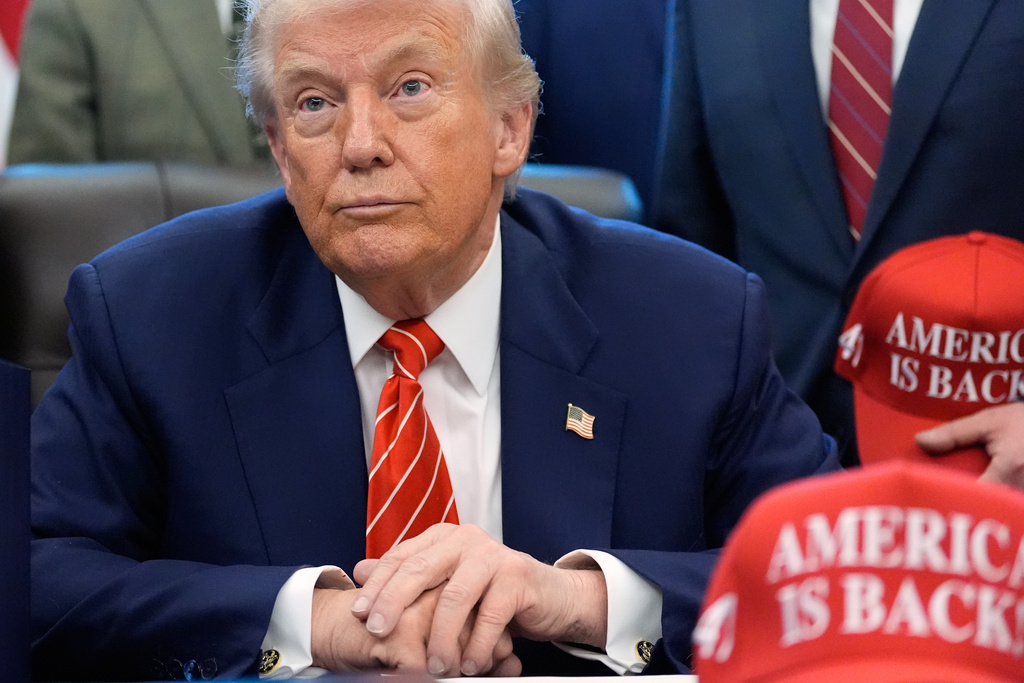
(AP Photo/Alex Brandon)
February has undeniably been a rollercoaster month for news, especially where it pertains to President Donald Trump. While the news media were focused on Trump’s sabre-rattling with Iran, Stephen Colbert’s yanked James Talarico interview, the Epstein files, tariffs, and an endless avalanche of other Trump news – they all but ignored a dire warning related to one of the biggest existential threats facing the American public today: the national debt.
In mid-February, the nonpartisan Congressional Budget Office (CBO) released a shocking report calculating that at the current rate of increase, the national debt is set to hit $64 trillion by 2036. Sixty-four trillion dollars is such an eye-popping number — double the national debt in 2023 and triple where it stood in 2018 — that it would mean the public would owe over 120% of overall GDP, crushing the previous record of 106% in 1946.
After such a stark warning on an issue impacting all Americans and just about every public policy that requires federal spending, from national security to social security, you would think that cable news pundits and print columnists would be beating the drum for Washington to take action. But, instead, Trump allies and critics alike skipped over the CBO report and allowed Trump to continue to flood the zone and drive the narrative.
While segments on debt and deficits might not be ratings gold, the issue was once a regular focus of the conservative media and a mainstay of any serious news outlet covering DC. Right-leaning media today have little interest in the story as it’s nearly impossible to cover it without taking a swipe at Trump and the GOP-led Congress.
The increase is in part due to Trump’s so-called “Big Beautiful Bill,” which included tax cuts resulting in far greater revenue losses than Trump’s tariffs or economic growth can replace. The CBO projected the federal deficit, the gap between federal spending and revenue, will increase from $1.9 trillion in 2026 to $3.1 trillion by 2036.
Committee for a Responsible Federal Budget (CRFB) released a statement on the CBO numbers and warned that the U.S. must act now to stave off fiscal disaster. “With debt approaching record levels, interest costs exploding, trust funds approaching insolvency, and deficits expected to remain more than twice as large as the oft-discussed 3% of GDP target, lawmakers should come together to enact significant deficit reduction,” said the nonpartisan group in a statement.
While several major news outlets, ABC, Politico, and the New York Times, for example, ran reports on the CBO numbers, the dire forecast received only one mention on cable news, when MS NOW’s Ali Vitali spoke to CNBC’s Ben Boulous about the report at 5:40 in the morning.
“A Congressional Budget Office report released yesterday projecting that the federal debt is going to reach $64 trillion within a decade. What does that mean for the overall U.S. economy?” Vitali asked.
“Well, this is the scorekeeper, if you like,” Boulous replied. “It’s a nonpartisan body, the Congressional Budget Office, and it publishes this outlook every year. And what it has suggested is that it sees the federal government running a $23.1 trillion shortfall over the next nine years. That gap has widened by $1.4 trillion since the last forecast that the CBO gave. Now, the most expensive policy change is the income tax cuts that the president has been pushing. They will cost roughly $4.7 trillion. The biggest source of new money is the President’s tariffs, raising roughly $3 trillion over the same time frame.”
“Doesn’t sound great,” Vitali replied before moving on.
Highlighting just how not great the national debt is at the moment, Trump did not mention the issue once during his State of the Union address on Tuesday night. According to a search of SnapStream’s transcripts of cable news shows, the punditry following Trump’s speech across CNN, Fox News, and MS NOW also failed to note that Trump skirted mentioning the debt.
Fortune business editor Nick Lichtenberg was one of the rare few in the media who pointed that out in a Thursday article titled, “Trump didn’t mention the $38.8 trillion national debt once in his State of the Union, but 90% of voters are worried.”
“A new bipartisan poll by the Peter G. Peterson Foundation, reviewed by Fortune, reveals a whopping 90% of voters are deeply concerned that the national debt—now nearing $38.8 trillion—is driving up inflation and the cost of living, including prices for groceries, energy, housing, and transportation,” reported Lichtenberg in his piece.
As Lichtenberg notes, the American public understands that piling debt on top of debt will eventually impact them directly, making their lives more expensive and threatening the safety nets they have already paid into.
Very few political leaders addressed the CBO report, even though it would undoubtedly be an easy way for the left to score some points against Trump and the GOP, which is supposed to be the party of fiscal conservatism.
One of the few voices who did speak out was Florida Governor Ron DeSantis (R). “Interest payments on the national debt now eclipse defense spending. Our national debt is projected to reach a record $64 trillion by 2036—triple the pre-COVID figure,” DeSantis wrote on social media about the CBO report, adding:
Americans across the board support balanced budgets. This is not a partisan issue; every state except Vermont has a balanced budget requirement in its constitution. We must hold Congress to the same standards as we adhere to in our households, communities, and states. So far, 28 states have passed resolutions in support of a federal balanced budget amendment. Today in Kentucky, I urged lawmakers to pass legislation to join this multi-state effort.
Sen. Rand Paul (R-KY), one of DC’s most consistent deficit hawks, commented, “$64 trillion in debt. $2.4 trillion more every year. And Washington still refuses to change course. The only honest, conservative response to this explosion of debt is to vote NO on reckless spending bills.”
Rep. Mike Levin (D-CA) did take the opportunity to attack Trump, “Washington Republicans spent years lecturing America about the national debt. Now Trump’s policies are blowing a hole in the budget and putting us on track for $64 TRILLION in debt within a decade. Not because we had to, but because he chose to. This is what happens when you govern with tax giveaways, political stunts, and zero plan to pay the bill. They’re running up the tab today and handing the check to our kids tomorrow.”
While the issue clearly isn’t resonating with journalists and cable news producers on the whole at the moment, with the midterms heating up, debates about government spending are inevitable. One can only hope it grabs the public’s attention and is treated as the exploding crisis it is – although if a $64 trillion warning couldn’t break onto cable news, it’s hard to see what will get the issue some airplay.
This is an opinion piece. The views expressed in this article are those of just the author.
New: The Mediaite One-Sheet "Newsletter of Newsletters"
Your daily summary and analysis of what the many, many media newsletters are saying and reporting. Subscribe now!









Comments
↓ Scroll down for comments ↓