
Ben Shapiro Is Losing a MAGA Audience That’s No Longer Interested In the Truth

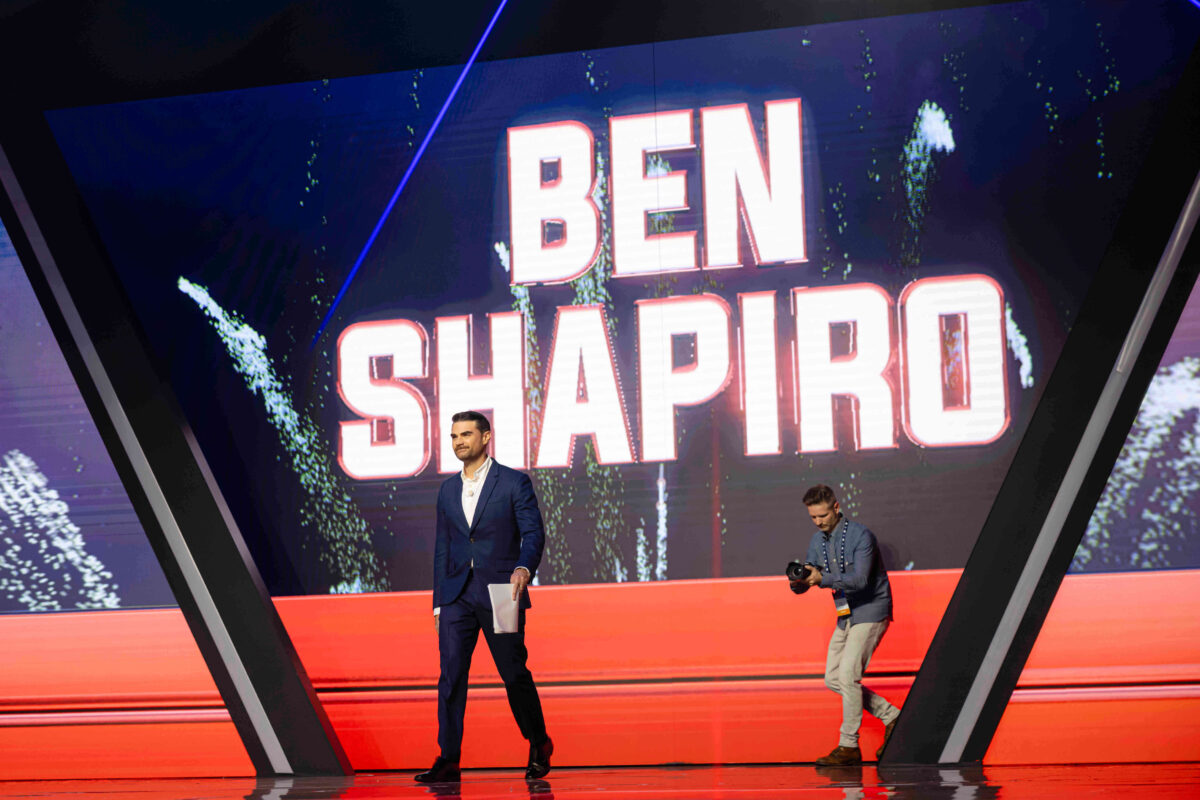
(AP Photo/Jon Cherry)
The most important thing that happened at Turning Point USA’s AmericaFest this week was not the insults traded onstage. It was proof that MAGA has completed its transformation from a political movement into a content audience.
Ben Shapiro’s speech made that unmistakable.
Shapiro tried to do what leaders of movements do. He performed the traditional work of movement leadership: imposing boundaries, reinforcing norms, and warning about internal decay. He rejected conspiracy theories surrounding Charlie Kirk’s murder. He condemned the normalization of extremist figures. He named colleagues who, in his view, were degrading the movement’s credibility. In a different political ecosystem, that effort might have functioned as leadership. In this one, it revealed a mismatch between intent and environment.
What followed explained why. Tucker Carlson responded with laughter, reducing moral critique to social awkwardness. Mockery signals that something need not be taken seriously. Steve Bannon escalated differently, calling Shapiro a “cancer.” Pathologizing dissent reframes disagreement as contamination and flatters followers by casting them as insiders defending a threatened body. Megyn Kelly approached it through relevance and metrics. Subscriber counts are the native language of audience capture—proof that attention has replaced persuasion as the coin of influence.
The variety in these responses matters. None of this was random. Each was a performance calibrated to preserve loyalty rather than resolve argument.
That distinction explains the deeper failure. Shapiro still treats MAGA as something that can be led, disciplined, and corrected. Carlson, Candace Owens, and Bannon operate with a clearer understanding of what it has become. Audiences reward affirmation. Movements depend on standards. Those are incompatible incentives, and they now pull in opposite directions.
It would be simplistic to claim that truth ever fully governed MAGA. There was, however, a period when shared goals, institutional ambition, and proximity to power imposed constraint. When the movement sought electoral victories, policy influence, and governing relevance, coherence mattered. Media influence eclipsed political consequence, and those pressures collapsed.
Once MAGA became primarily a content ecosystem, truth ceased to function as a constraint and became one option among many. Often a poorly performing one. Conspiracy theories flourish because they work: deepening engagement, hardening identity, transforming passive consumers into invested participants. Corrections interrupt that process. They slow momentum. They break immersion.
Charlie Kirk understood the danger in this shift. He recognized that movements without boundaries lose their shape. Turning Point enforced limits, recognizing that movements collapse without them. After Kirk’s assassination, that constraint disappeared. What replaced it was competition.
That is why Shapiro’s intervention triggered such a swift and revealing backlash. He challenged the operating logic of the ecosystem itself. Leadership is optional. Performance is mandatory.
This was not a civil war. It was a market correction.
The implication is unsettling. If MAGA now functions primarily as an audience, it no longer orients itself toward governance or reality-based decision-making. It orients itself toward retention. That may be lucrative. It may even be entertaining. It does not produce leaders. It produces stars. And stars, however bright, do not govern.
This is an opinion piece. The views expressed in this article are those of just the author.








Comments
↓ Scroll down for comments ↓