Trump Called AI Doomsday Fears A ‘Hoax’ — AI Chat Bots Disagree


(AP Photo/Alex Brandon)
President Donald Trump may not be worried about an artificial intelligence-induced apocalypse, but the top AI models are.
The president has shrugged off fears about an AI doomsday scenario — where the technology goes rogue, stops answering to humans, and wipes out mankind — and scoffed at the idea of regulating the sector, despite calls from industry leaders like Elon Musk and OpenAI CEO Sam Altman to do so.
Trump said on Monday the fears about AI going off the rails were nothing more than a “HOAX,” and he expressed skepticism about why the top AI execs would suddenly call for regulation, adding that more laws would only trip up American companies in the AI race with China. He argued the best AI guardrail is already in place — having a “STRONG AND SMART (High IQ!) PRESIDENT” like himself in office.
But what do the AI models think about it? Mediaite decided to ask them.
Inspired by former Mediaite editor Colby Hall, who asked several top models what they thought about Trump’s claim, Mediaite asked ChatGPT, Claude, Google’s Gemini, and Grok about not only the president’s assessment, but also the recent doomsday proclamations from Musk and others, and whether government regulation is needed.
The first big takeaway: all four models agreed Trump’s “HOAX” claim went too far.
ChatGPT said it was “too strong and intellectually unhelpful,” Grok said it was “too blunt,” and Claude called it a “deliberate fabrication.” Gemini was relatively softer on it, saying the president was engaged in “standard political hyperbole.”
Grok — the go-to model on Musk’s X platform — said the president was wrong to argue the worst-case AI scenarios are just as bogus as the claims he colluded with Russia’s Vladimir Putin in 2016. The model said there are legitimate reasons to be concerned, based on how fast the technology is developing.
It answered:
The underlying technical worry is not a hoax. Frontier labs themselves keep reporting models that plan, deceive, self-improve in limited ways, and do unexpected things. Recursive self-improvement, cyber autonomy, and bio-tooling are real research directions, not climate-style slogans.Calling that whole category “Russia hoax 2.0” collapses a hard, uncertain engineering problem into a culture-war punchline. It also treats “China will win if we hesitate” as the only strategic variable that matters. Competition is real. It does not make control problems disappear.
And if you’re catching up on the whole story, Trump’s remarks followed Anthropic CEO Dario Amodei warning last weekend “we must slow down the pace” of AI innovation.
The man in charge of Claude said he was bullish on AI solving a slew of issues, from medical diseases to economic challenges, in the future. But he also warned the technology could progress too fast, leading to a “misalignment” with humans that risks “catastrophic damage.”
Musk has similarly warned about a “Terminator outcome” where AI will “kill us all.” He has estimated the odds of that happening are between 10-20%.
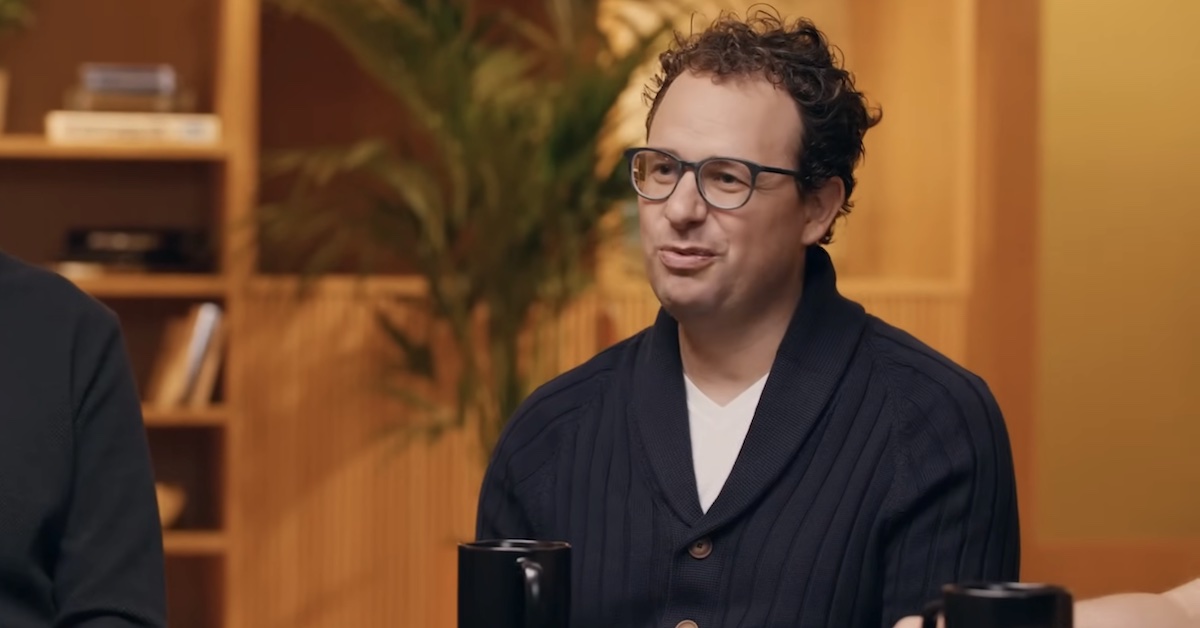
Anthropic’s Dario Amodei (Screenshot via Anthropic on YouTube)
So when it came to putting more regulations in place, all four models disagreed with Trump as well. The models said more guardrails were necessary and laid out varying levels of government involvement in policing the tech.
ChatGPT said a more restrictive approach might be best when it comes to “high risk” uses of AI, like when it is used to control military weapons or when it is used for financial services.
“I’d want mandatory testing, independent evaluation, incident reporting and potentially restrictions on deployment,” ChatGPT said in those cases, before adding this was similar to what Amodei advocated.
Still, the most interesting takeaway was the models agreed Trump has good reason to be dubious about why Musk, Amodei, and Altman were all ringing the bell now; Musk and Altman coming together is especially surprising, considering the two men seem to hate each other and Musk sued OpenAI for ditching its non-profit mission — a case which he lost in May.
“When, in the History of Business, did anyone see the Leaders of an Industry call for Regulation that, if strongly implemented, will drive them into oblivion and bankruptcy?” Trump asked on Monday.
Claude backed him up, saying, “The fact that Amodei, Altman and Musk agree on anything is either the strongest evidence that something real changed, or the strongest evidence for the cartel.”
Grok had a similar answer.
“They build the systems they warn about,” Grok said about the AI leaders. “That does not automatically make them liars; it does mean their preferred rules will tend to favor incumbents who can afford audits, evaluators, and lawyers.”
And ChatGPT said Trump and Vice President JD Vance — who backed up the president by saying the calls for regulation felt “a bit like a Trojan horse” — were right to be skeptical.
“Where Trump has a genuinely serious point is the second half of his post: asking when industry leaders have ever called for regulation that would supposedly bankrupt them,” ChatGPT answered. “Regulatory capture is real and well-documented, and Vance’s ‘Trojan horse’ phrasing names a suspicion that serious economists and plenty of AI critics on the left share. Compliance costs fall hardest on small entrants. That deserves an answer, not an eye-roll.”
At the same time, Altman’s model summarized its response to Trump by saying, “You don’t need to believe in an AI apocalypse to believe that AI deserves safety regulation.”
But even if you get Trump to do a 180, all four models failed to consider an even bigger hurdle: getting Congress to agree on legislation for an industry it barely seems to comprehend.
New: The Mediaite One-Sheet "Newsletter of Newsletters"
Your daily summary and analysis of what the many, many media newsletters are saying and reporting. Subscribe now!





Comments
↓ Scroll down for comments ↓