Mediaite Q&A: Ari Melber On the ‘Electricity in the Air’ at the Network Soon-to-Be Known as MS NOW

Screenshot
On Saturday, MSNBC officially becomes MS NOW — ushering in an uncertain time for a network that has had the corporate backing of Comcast for more than a decade, and GE before that.
But to hear one of the network’s stars tell it, the prevailing feeling inside the company’s new headquarters is excitement rather than trepidation.
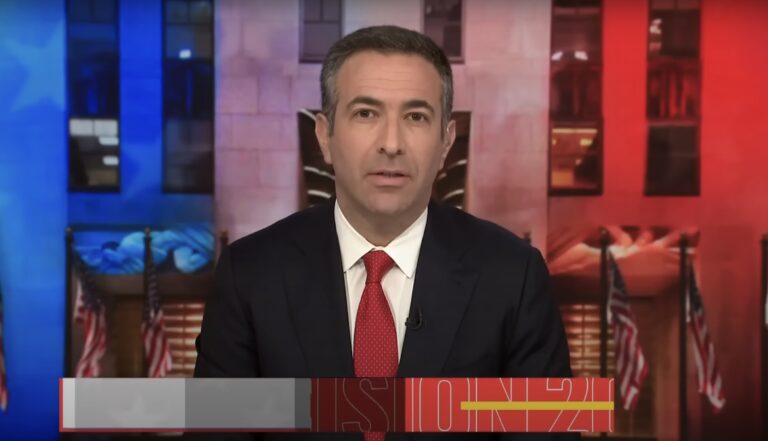
“There’s an electricity in the air,” said Ari Melber — the network’s longtime 6 p.m. host — in an interview with Mediaite conducted on Nov. 6.
Melber and other envoys dispatched by the network to speak with the media in recent weeks have all carried a message that nothing is changing at the network besides the name. A reported $20 million marketing campaign has tried to drive home that point as well. There was a buzzy live event in New York City where all of the network’s stars were on hand for an evening that served as something of a pep rally.
Yet the fact is, things are changing — even if many of those changes are not discernible to viewers. The network has had to build a newsroom nearly from scratch, as it is no longer able to work with the journalists of NBC News. It’s leaving behind its iconic headquarters at 30 Rock for a new space in Midtown Manhattan. And that multi-colored peacock, one of the most recognizable logos in America, is disappearing from the lower right-hand corner of viewers’ screens for good.
But if any of the uncertainty is wearing on the people at the network, you wouldn’t know it from talking to them. And that goes particularly for Ari Melber — whose nightly show, The Beat, has held down the 6 p.m. ET time slot for eight years now. Melber has been a steadying force at the network and — despite rumors earlier this year that he was considering jumping ship — has committed to being one of MS NOW’s franchise players.
The longtime legal analyst spoke with Mediaite about the happenings at MSNBC/MS NOW, as well his concerns about “the rule of law as we know it” in America.
This interview has been edited for style and clarity.
Mediaite: Let’s start with last week’s elections. Last Tuesday was a big night for the network, it was the big night for Democrats. When you went on the air, did you sense a more engaged, optimistic, audience than you have for much of the past year on Wednesday night?
Ari Melber: There’s an excitement and an interest out there, and elections are big nights for everyone always. MSNBC beat Fox, had more viewers than Fox. (Editor’s Note: This comment was based on initial data which showed MSNBC beating Fox in total viewers. According to updated Nielsen Big Data + Panel numbers, Fox News topped MSNBC — averaging 2,924,000 compared to MSNBC’s 2,883,000.) And one factor may be the excitement people feel about the results as they started to come in, and another is any time any government is in power, there’s sometimes energy with those interested in change and alternative ideas and we may be seeing some of that.
But prior to the election, and even the No Kings protests… did you sense a listlessness in the audience? Or desperation? And do you feel like that just flipped overnight, or is the shift going to be more incremental?
It’s a fair question. I think it helps to divide it. I think our core audience has stayed energized, engaged. We see that in TV and online. And we saw that in a big event that sold out and had plenty of excited people. The broader audience, people who might be more sporadic viewers or come and go, had an intense 2024, and I think some of them may have pulled away, and then big events can bring them back. Whether those events are seen as positive or negative, or mobilizing or exciting, those are different questions.
To pick a non-partisan example, when Covid first landed, it was a tough thing for everyone. And it increased interest in the news everywhere as a problem people needed to learn about. So it’s not that it’s only a partisan or election win, but big events, I think, drive interest. And obviously, when there’s been a debate in this country about about whether Donald Trump’s point-and-a-half win was a realignment that changed everything, or is there a reversion back to something else, Tuesday clearly suggests people are looking for something other than the way he’s governed this year, and the rejection of the Trump agenda is clear — which is why Steve Bannon and Ted Cruz are acknowledging it. The president himself talked about a rejection of the shutdown. Werll, the incumbents own that. So yes, I think there’s a lot on the table that’s gonna interest the audience. And we at MSNBC, soon to be MS Now, and The Beat, we welcome the entire audience. So I don’t make assumptions about what viewers might want. On Tuesday night, I had a Trump administration veteran on with a Democrat in that debate. So I’m trying to make sure viewers are going to hear everything, and then they can make up their own mind.
You just mentioned booking pro-Trump guests…where is your booking department right now with the White House? I think of your show and your interviews with, say, Peter Navarro over the years have been just all-timers. And you’ve had these incredible chats with with people who a lot of people on the Left are not willing to engage with. You’ve repeatedly been willing to engage with them. Where are you guys right now with the White House. Do you feel like you can and will continue to pursue those bookings?
Yes, on The Beat, we’re committed to be fair and give people time, which I have found works for a lot of guests. They have to be willing to withstand a journalistic interview, which includes fact-checking, so we don’t cut any deals. but I give credit to anyone who’s up for that.
And going into this election, we had — in the week leading up the election — the Democratic leader, Hakeem Jeffries. We had Zohran Mamdani on election eve. Great bookings. Tuesday, we had former Trump ambassador Gordon Sondland. And this second term, we’ve had the border chief Tom Homan, Dr. Oz. And during the campaign, we had Corey Lewandowski and Stephen Miller, which was an interview that got an Emmy nomination — although I’m happy to lose to great peers. But that was some recognition for that type of interview. And so all those people are welcome on the show.
Big election night for the network in the ratings. What was it like in the building the next day? Was it a lot of popping a champagne corks, or was the feeling more that it was step one of a 50-step job?
I didn’t see any champagne bottles. Our folks on air that everyone sees, and the far larger group off air — journalists and producers who create the night — were all working past midnight. So I don’t know that the next day, they’re celebrating. It’s more rest and reboot.
But I think there’s an electricity in the air. We are the same people, in the same shows, with the same mission. But we’re going independent as MS NOW, and I think there’s an electricity and excitement around that. And seeing the audience show up. and beating Fox Tuesday only reinforces that.
And then online, MSNBC has just excelled in the last few years. We’ve heard a lot about podcasts and TikTok in general. And we’ve been able to ride that wave, frankly, better than some other traditional media. So MSNBC is some months beating Fox on YouTube, and other months right even with them — which shows that the younger online audience is really with us. We’re approaching two billion views total. So we have seen a lot of interest — not only in the live linear TV — but the breakout viral excerpts online. And so we’re going to continue to innovate there. But I think that looks exciting for us for the future.
And also the long form interview shows as well that you’re involved with. That’s part of the story for you too, right? It’s not just the short, quick clips, but also lengthy podcast content where you’re trying to expand as well.
Absolutely. And there’s more than one way to do it. We found this year some of our long-form videos where we’ll play part on TV, but the majority is only available on YouTube — like any video podcast or show. And we see a real interest and hunger for that depth. So we’ve had, you know, hour-long discussions with people like Bob Woodward, or the authors, is Yuval Harari and Francis Fukuyama, and those do millions. And they last longer because some of the subjects are not the news of the night. So again, shout out to the audience. We see things do well with TikTok, but there’s also a hunger for that depth.
You just dropped the tagline, “same mission, new name.” We’re hearing that a lot from folks at the network in recent weeks. My question to you though is: Is there a concern that there’s a segment — and you’ve talked about the ideological diversity of your audience — but is there a portion of that audience that sees the words “same mission” that may not be satisfied? They might have the idea that “Hey, MS doesn’t have this partnership with NBC anymore. They don’t have any NBC overlords, and now they can really go for it.” Do you feel that there’s that part of the audience out there who may be left wanting more?
I don’t know what everyone’s thinking out there. We’re talking about millions of people. Anecdotally, I don’t have people coming up to me talking about the corporate ownership structure, or the shift. Of the 10 things that people come up to me to talk about, it almost never comes up. That could change, but I don’t get that.
I do think we are in a time where other media companies and executives have caved to pressure. And we are an independent company that is not doing that. So the largest distinction isn’t really between our network and now independent cable and digital arm. The largest distinction is, companies that have openly admitted, and law firms — just to pick a different industry — that have open admitted that they are going to cave to government pressure after many decades of claiming they would never do that.
So we have a true brand distinction with, with any media, or really anybody who’s doing that. And we have the record to show we’re not doing that. Our leadership is independent. And that’s, to me, what “same mission, new name” means. If you want the lyric version, Quavo says “Ain’t nothing changed but the chains.”
I was waiting for the musical drop.
It means he’s the exact same person he started out as with better jewelry. And quite honestly, we have more viewers than we had 10 years ago. So it is true that the business models are shifting, but news and sports continue to do great on TV. And MS News is doing better online than it’s ever done — meaning we’re reaching more people, and more young people, at any time in our history. So in that measurable way the future’s bright.
Well, anybody that would question your own editorial independence, or willingness to say what’s on your mind, had to take comfort in your commentary a couple of weeks ago after the Comey indictment came down. You said, essentially, we’re past the red line. And you said, “if you use the analogy of the boiling frog, when it comes to the rule of law, the frog has been boiled, and it’s dead.” Do you still feel that way?
Yes. It’s clear that we are living in a country now where the political leadership of the government will publicly demand that its opponents be harassed, investigated, indicted. And then that happens. And that is an echo of McCarthyism and the Nixon era. The chapters in our history where that has been proven, it is rightly seen as a disqualification for leadership, as it ultimately was for Joe McCarthy and Richard Nixon. And we are a country that has long criticized foreign nations which use that approach because you can’t really have free and fair elections if the incumbents can can investigate and indict people to politically thwart them. So it’s a very clear line.
People are busy and living their lives. And we’ve seen this week, and other indicators, people have their own problems, economic problems. Ao I don’t know I can’t predict if that if that total big government politicization of our of our justice system under Trump will will meet with a voter backlash or not. But it certainly is an effort to end the rule of law as we know it. And then when you start indicting the opposition to effectively change democracy into into something where the incumbent government has a veto power because if they can use these tools against people they can basically eliminate the opposition, practically speaking. We’ve seen that abroad.
And to be very clear, the countries that have done that abroad have done it from the left and the right. There’s nothing ideologically-automatic about who abuses power. We’ve seen leftists in Venezuela, Cuba and plenty of places. Of course, you can back to Stalinist Russia, if you want. And there’s right-wing regimes will do it.
So the fact that the current U.S. government is doing this from the political right doesn’t mean it’s a right-wing problem. It’s a problem wherever people abuse power. I think, rightly understood, it’s much closer to financial corruption than some partisan thing. And so, in the same way that Bob Menendez is in prison because he was corrupt, there are politicians in both parties who do that. And the public could serve better when we patrol that.
The question then become what can the courts do? Because to the extent there are any checks on Trump’s power right now, they’re coming from the judiciary. So, many people on the left are looking at the courts to serve as a guardrail. Are the expectations that are out there from the left on what the courts can do to check this administration, are those expectations realistic?
The courts operate through cases. They don’t pick battles, and they don’t and are not supposed to make broad rules and policy on the fly. So the courts can help slow or stem the extreme or unlawful actions that are brought to them, that are challenged in court. They can’t handle everything.
If you look at this first year, they’re obviously, over time, going to address whether executive power has been illegally seized on tariffs, and the use of troops. And if Donald Trump tries to seize power beyond the end of his term, or run for a third term, they can clearly stop that. And the rest of the system follows that. So if they say ‘you’re ineligible for a third term,’ then no state can print that ballot or count that ballot. And remember, if there’s a controversy over ballots, sooner or later, it can end up back in the courts where they’ll say, ‘well, if this person’s ineligible, we don’t count that.’ They shouldn’t have been on the ballot. So there are hard lines over those big cases, but they can’t do everything.
I’m curious…so many Democrats come on your show and on the network and attack the legitimacy of this Supreme Court. Not just calling it a conservative court, but going after the institution at large. Are those attacks fair, or do you think they’re unfair? Do you have concerns about the Supreme Court as an institution.
Well, everyone has a free speech right to criticize the court, including in harsh terms. The rule of law requires that we follow all rulings, regardless of whether you personally agree. I haven’t heard many guests, I think I would remember it, say that we should start ignoring the rulings. So that I think is the key line.
Some members of court, I’d say more so than in the past, have openly been more partisan, openly accepted more money, gifts, and favors from one side. And some have have clearly broken vows they made under oath to the Senate — the ruling on abortion rights being the most clear example. Now, that’s still a lawful ruling that everyone must follow, and there’s no law saying they can’t change their mind. But that I think is problem of public legitimacy for the court, because we already have two branches that work based on politics, and unfortunately sometimes on money. The founders didn’t view the court that way. It’s why they gave it lifetime tenure, so you don’t have to worry about getting another job or your retirement. It is why they don’t subject federal judges to elections. Some states have elections, which turns judges much closer to politicians, obviously.
So I do think that there are some members of the current court that have hurt its legitimacy, and we see that in the public opinion. But they can obviously legally change their mind. And they may justthink that this is the type of leadership that the courts now need.
Back to your show, before we wrap up. I gotta run. Take us inside a production meeting and how you build a rundown. When you’re on your morning call talking about putting the show together, what drives you — broadly speaking? What kind of topics? Tell me what a new MS viewer is going to see in the coming months when they see your show and watch your topic selection. Tell me how the sausage gets made here.
We aim to give a viewer the facts and the big stories first. We’re not going to cover Seattle, or hip hop as a top story, just because I’m from Seattle and like hip hop.
But you may do it in the E block, right?
Exactly. And we’re gonna bring in guests that try to reflect what’s actually going on in the country, not just one side or the old guard or the people from, you know, who’ve ascended to the top. So we, and we’ve done that with new voices and all kinds of people and also drawing in culture. And then by the end of the hour, we might give you something different. We just had two Tony-winning playwrights on. Last month when you don’t see a lot of playwrights on TV, and I understand why.
Authors, musicians, really reflect on culture. And now I find that they’re more relevant than ever because politics has sort of eaten the culture. You can’t talk about Sydney Sweeney or the Super Bowl without very quickly running into our polarized politics. And so it makes sense to us to show viewers not only things they might already know, but new voices in the culture that are relevant. And we think of it as part of the news, not leaving the news.
And as for the rundown, you know, The Beat’s been on over eight years now. We’re the longest-running 6 p.m. show in the history of this channel. And so we’ve found some longevity here. And we have a really great team that’s worked together for a long time. Really talented journalists, producers and bookers who really think deeply about planning the show — sometimes weeks out.
So yes, there’s always the morning of what’s happening. But we’ll look out on that grid far in advance. When we went to Snoop Dogg’s California studio that was far in advance. We had Phoebe Bridgers on as a young talented singer, and that came together over time. So we are a nightly show that tries to be on the news, but we do have that back-of-the-magazine goal. And I’m very lucky to have a team that basically is kind of doing two shows. Because they’re trying to do the nightly shows at an A-plus level, and then they’re also doing the longer form news. The old news-magazine style, and so we hope to hit that mark.
——
Joe DePaolo is the Executive Editor of Mediaite.