Harvey Weinstein Retrial Ends in Hung Jury — Jurors Share What Made Them Hesitate to Convict

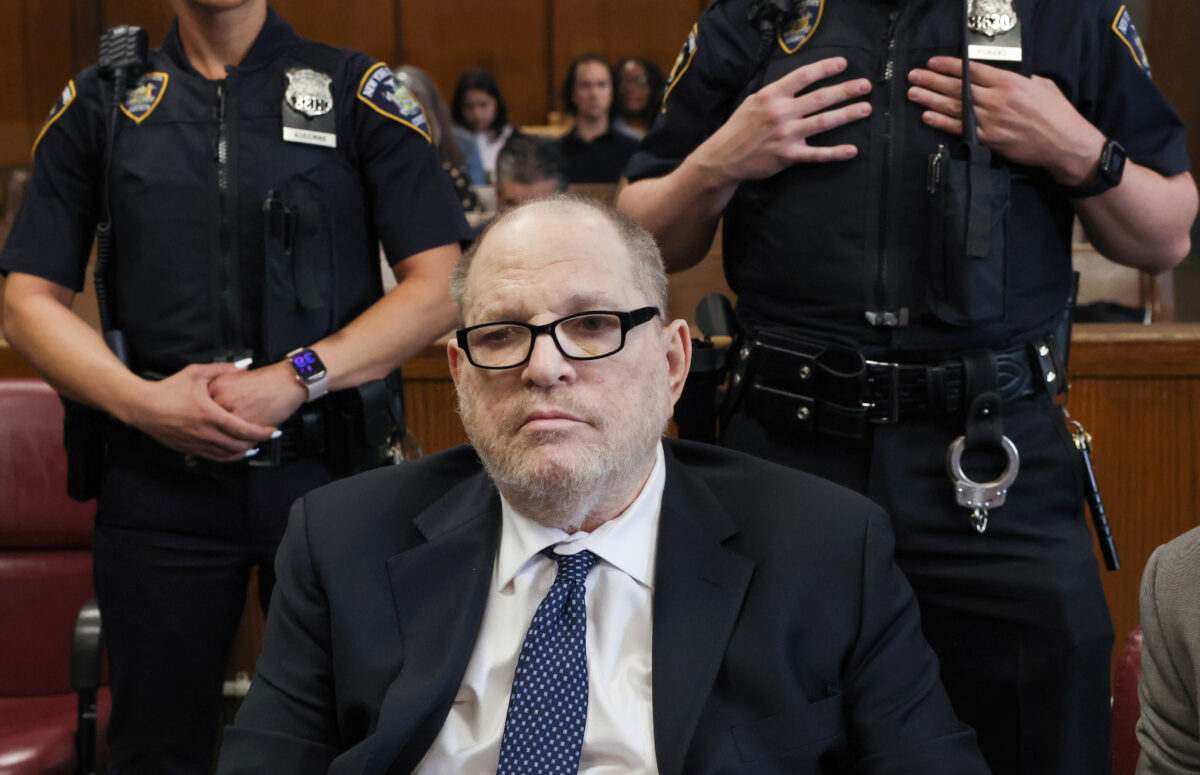
Timothy A. Clary/Pool Photo via AP
Harvey Weinstein’s Manhattan retrial ended in a mistrial Friday when jurors deadlocked after more than two days of deliberations, and several of them spoke to reporters about why they were unable to reach a verdict.
The disgraced Hollywood producer is one of the most infamous names associated with #MeToo, viewed by many as sparking the movement after dozens of women came forward to accuse him of sexual harassment, abuse, and rape. Weinstein has faced criminal charges in both New York and California.
He was convicted in 2022 in the California case of three of seven charges against him — forcible oral copulation, sexual penetration by a foreign object, and forcible rape — related to one accuser identified as Jane Doe 1. Weinstein was sentenced to a 16-year prison term.
In the New York case, in 2020, he was convicted of raping aspiring actress Jessica Mann and for sexually assaulting former Project Runway production assistant Miriam Haley; he was sentenced to 26 years in prison. In 2024, the New York Court of Appeals overturned the conviction, citing “egregious errors” of procedure by the trial court and ordered a retrial.
In his retrial last year, Weinstein was convicted of a single count of criminal sexual act against Haley, acquitted on another count, and the jury could not reach a verdict regarding the rape count involving Mann. A new trial was ordered regarding that single count that concluded this week.
After more than two days of deliberations, the jury of four women and eight men deadlocked and the judge declared a mistrial again. Manhattan District Attorney Alvin Bragg will have to decide whether to drop the matter or make a fourth attempt to pursue a conviction against Weinstein for raping Mann. The California conviction, and his conviction for assaulting Haley, still stand.
Bragg issued a statement expressing disappointment in the mistrial and expressing his respect and gratitude for the jurors, thanking them for their “time and dedication.”
“We will consider our next steps in consultation with Ms. Mann, and in consideration of Harvey Weinstein’s pending sentencing following last year’s trial conviction for forcibly sexually assaulting Miriam Haley,” Bragg added.
Los Angeles Magazine reporter Lauren Conlin covered the trial and interviewed several of the jurors after court was adjourned. According to Conlin (and confirmed by The New York Times and other outlets’ coverage of the case), several jurors told her that the jury was split 9-3, with nine jurors voting not guilty.
One male juror who declined to share his name told Conlin “I don’t think so” when she asked him if he thought the prosecution had “proved their case beyond a reasonable doubt.”
He described the deliberations as “very respectful” and “very open to the very end,” until they got to the point “where minds weren’t going to change.”
The juror said he was “surprised” about who among the jurors was that was against conviction, but did not specify.
A female juror said that all the women voted not guilty. “A lot of us did not feel that they proved it beyond reasonable doubt,” she said, saying that out of all the evidence, there were “two things” that supported Mann’s accusations: “her testimony,” and an expert witness doctor’s testimony “that kind of explained away a lot of our doubts, but not the ultimate doubt, of a lot of us felt that we found a lot of holes in her cross examination versus the direct, so that was the main deciding factor.”
The juror expressed that she had “a lot of sympathy” for Mann, her troubled childhood, and was inclined to want to believe her as a victim, especially in light of the other accusations against Weinstein. The other jurors “were very sympathetic” towards Mann too, she added, but they still were not able to get over the reasonable doubt threshold.
The vote was 9-3, this juror confirmed, with all three votes to convict coming from male jurors. “All the women thought not guilty,” she said.
Another male juror said that the “general consensus” was that “there was a lot of contradictions in [Mann’s] statements,” citing the jurors’ feeling that she had displayed “an incredible memory” during the prosecution’s case but then “forgot a lot of things” when being questioned by Weinstein’s defense counsel.
“And so it kind of spoke a little bit to her credibility,” the juror said, “but it was close. It was not clear cut, right down the line, it was just not. So it was a really tough decision.”
He added that the jury was “really upset” that they could not reach a verdict, and praised his fellow jurors as “a really good jury” with everyone “very mindful and respectful and listened.”
He said there had been “a little bit of tension, a little bit of heat” near the end of deliberations, but “we got along, we got along well — there were no real blow ups,” just “people kind of dug into their opinions and stuck to them.”
He said his vote was for not guilty and emphasized, “I don’t come at that easily, I don’t come at that easily at all,” but the “prevailing thought” was that Mann “had a lot of inconsistencies” in her story.
In her report, Conlin said she was surprised so many jurors were willing to chat with her and discussed in more detail what they had told her.
—
New: The Mediaite One-Sheet "Newsletter of Newsletters"
Your daily summary and analysis of what the many, many media newsletters are saying and reporting. Subscribe now!








Comments
↓ Scroll down for comments ↓